Executives and board members do not want to see your sprint backlog. They want a single view that answers three questions: where is the product going, are we on track, and what are the risks. The templates below are designed for that audience: clean layouts, strategic framing, and enough detail to be useful without drowning the room in implementation specifics.
These thirteen templates cover the most common executive communication scenarios: investor updates, board reviews, quarterly business reviews, stakeholder alignment, and portfolio-level planning. Most are PowerPoint files that open in Google Slides, Keynote, or LibreOffice Impress. Two are Google Sheets for teams that prefer spreadsheet formats.
Strategic Vision and Direction
These templates communicate where the product is heading and why. Use them when the audience cares about strategy and direction more than delivery timelines.
Investor Roadmap
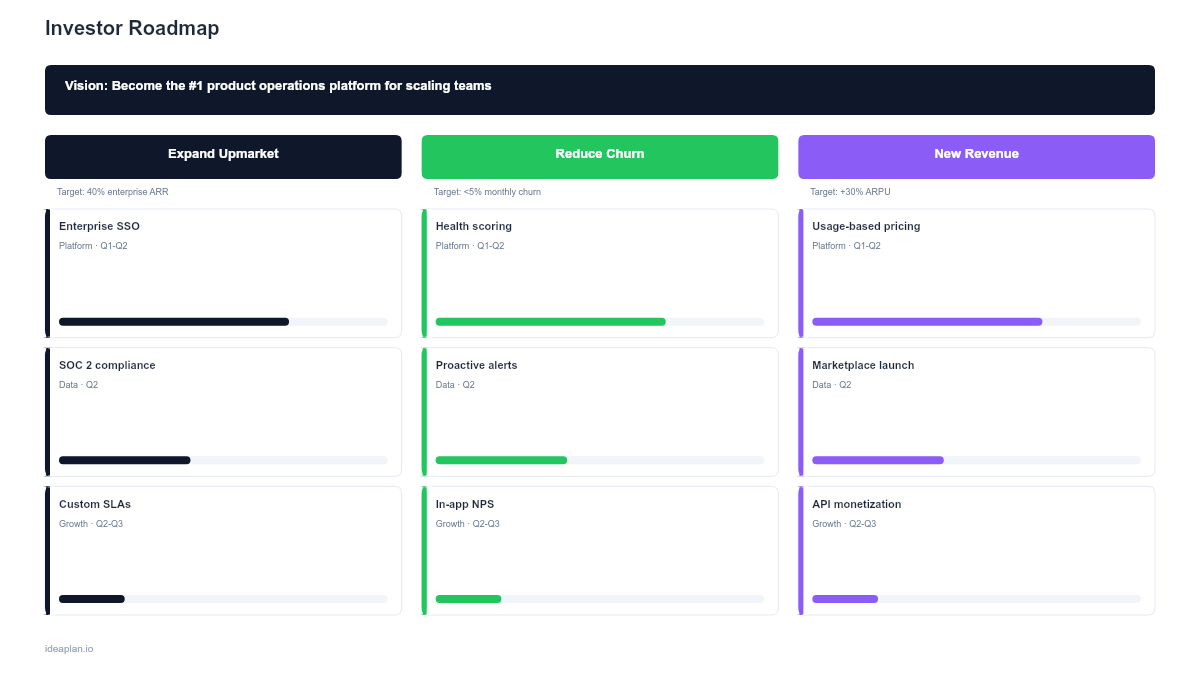
The investor roadmap is built for fundraising decks and board updates. It frames product plans in terms investors care about: market opportunity, competitive positioning, and the connection between product milestones and revenue targets. The format strips away engineering jargon and replaces it with business outcomes. Use this when pitching to VCs, updating existing investors, or presenting at board meetings where the audience includes non-product stakeholders.
Product Vision Roadmap
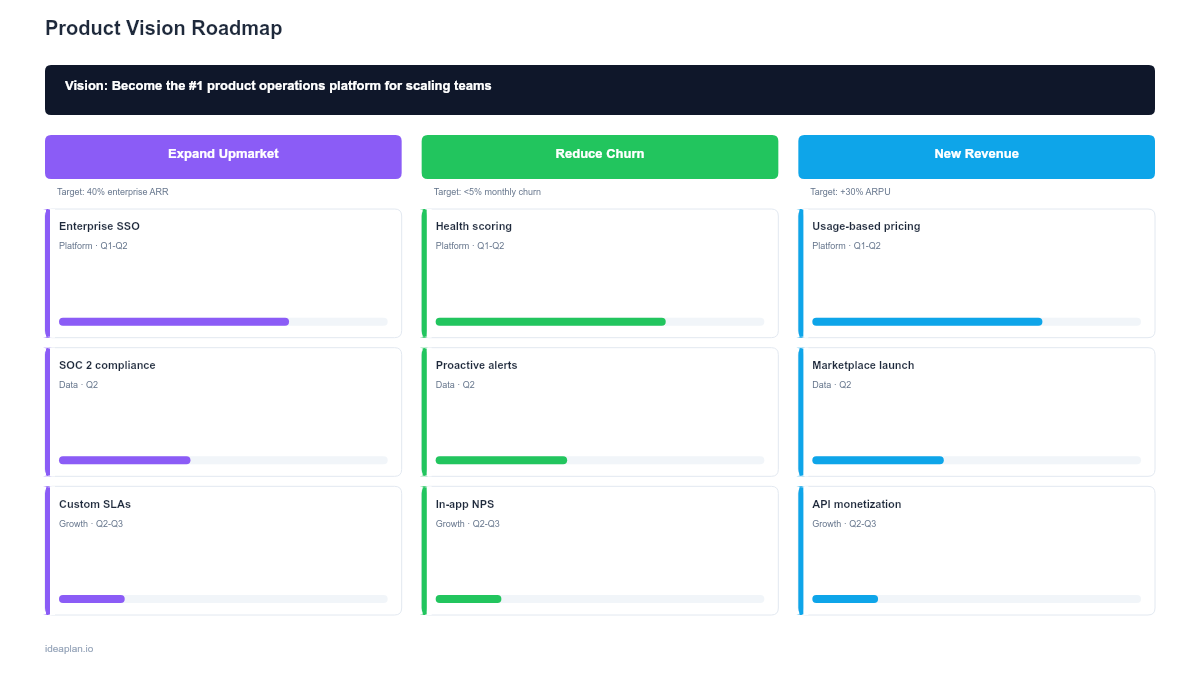
A product vision roadmap connects the long-term product vision to the near-term plan. It starts with the aspirational end state (what the product looks like in two to three years) and works backward to show how current initiatives build toward that future. This is the right template for annual planning kickoffs, company all-hands presentations, or any meeting where you need to inspire alignment around a shared direction. The product strategy guide covers how to build the vision that feeds this roadmap.
Product Strategy Roadmap
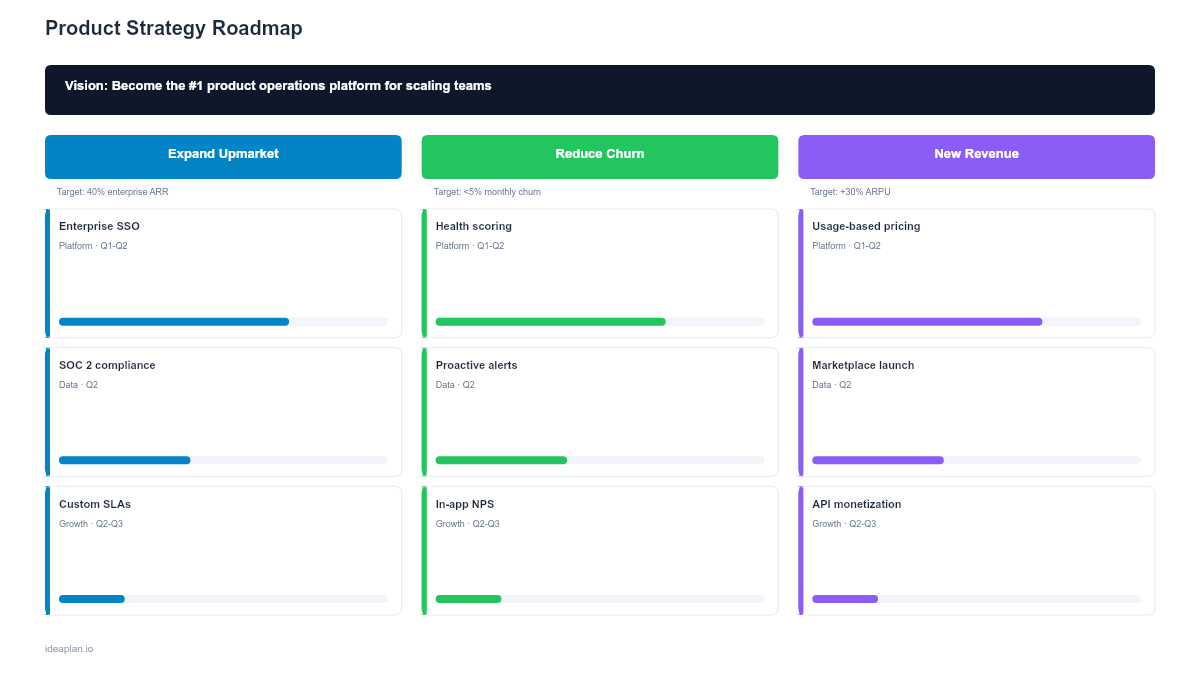
The product strategy roadmap organizes initiatives by strategic pillar rather than timeline. Each pillar represents a bet the company is making (growth, retention, platform, or whatever your strategic themes are) with initiatives listed under each. This format is effective for leadership teams that want to see investment balance across strategic priorities. It answers the question "are we putting our resources where our strategy says we should?" without getting into delivery dates.
Quarterly and Business Reviews
These templates structure regular cadence meetings where you report on progress, surface risks, and align on priorities for the next period.
QBR Roadmap
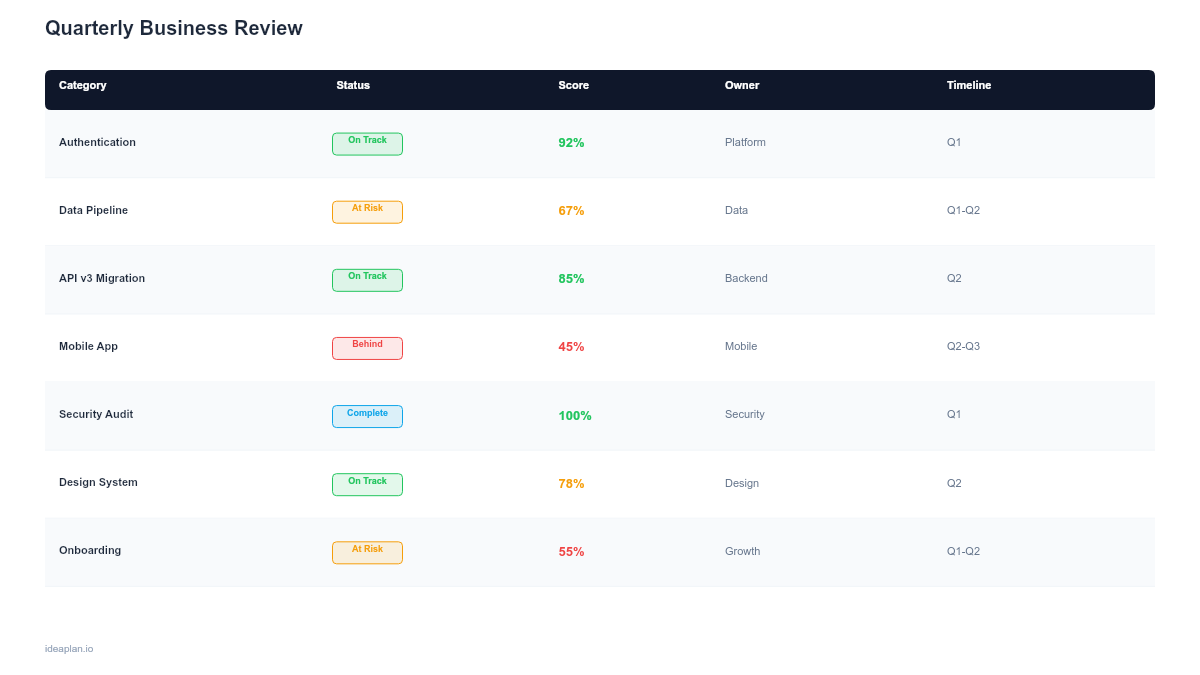
The quarterly business review roadmap is designed for the meeting that happens at the end of every quarter. It includes a look-back section (what shipped, what slipped, what we learned), a current quarter status view, and the plan for the upcoming quarter. The format forces you to confront delivery reality rather than just presenting the plan. Most QBR templates focus only on forward-looking plans. This one includes accountability for what was promised last quarter.
Quarterly Product Roadmap (PowerPoint)
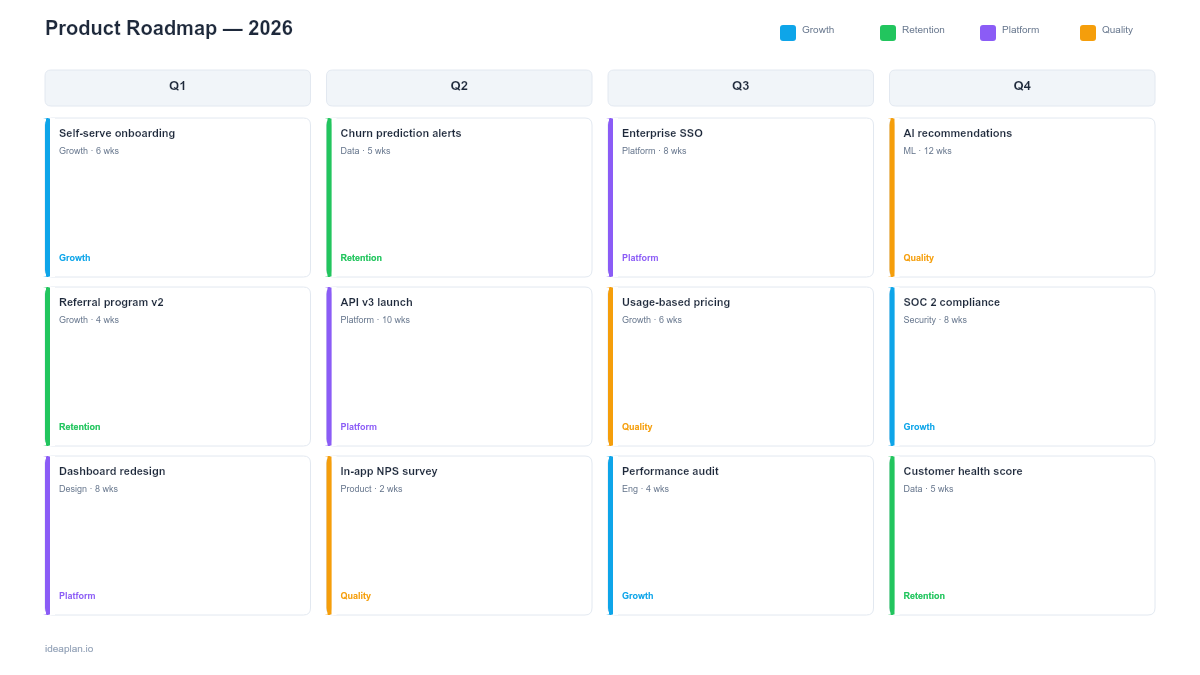
The quarterly product roadmap organizes initiatives into Q1 through Q4 columns with strategic themes and progress indicators. It is the standard format for annual planning conversations and gives leadership a full-year view on a single slide. Unlike the QBR template (which focuses on the review meeting), this template is the artifact, the roadmap itself that gets referenced throughout the quarter. Compatible with OKR frameworks for teams that tie roadmap items to key results.
Quarterly Roadmap (Google Slides)
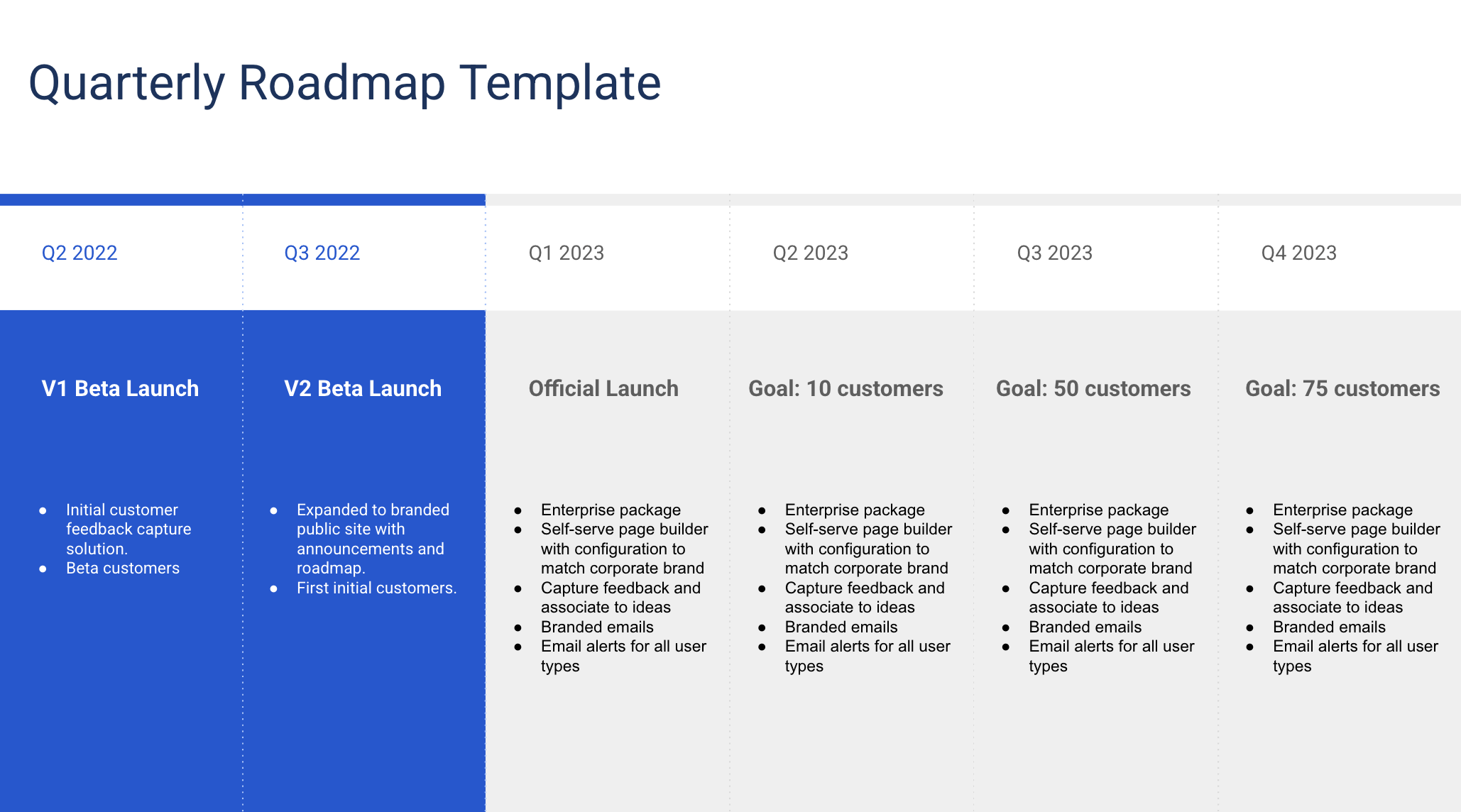
The same quarterly format optimized for Google Slides. Real-time collaboration makes this version better for teams where multiple product managers contribute to the roadmap or where leadership wants to comment directly. The Google Slides version is also easier to embed in internal wikis and shared drives. This format is ideal for best practices on structuring quarterly plans.
Stakeholder Alignment
These templates help you manage upward and sideways, keeping stakeholders informed and aligned without creating a communication overhead that consumes your week.
Stakeholder Communication Roadmap
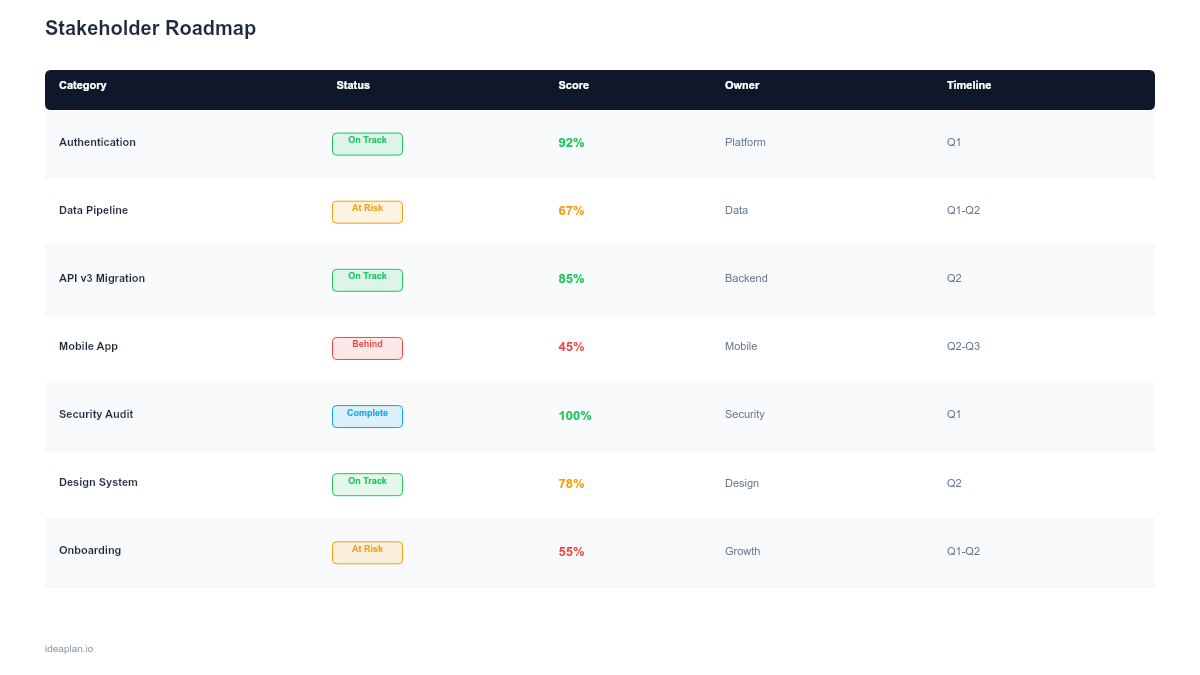
The stakeholder communication roadmap is a meta-template: it plans how, when, and what you communicate to different stakeholder groups. It maps each stakeholder to a communication cadence (weekly, monthly, quarterly), preferred format (email, meeting, Slack), and the level of detail they need. For product leaders managing multiple stakeholder relationships, this template prevents the common failure mode of communicating the same way to everyone and satisfying no one. The stakeholder management handbook covers the full strategy.
Stakeholder Mapping Roadmap
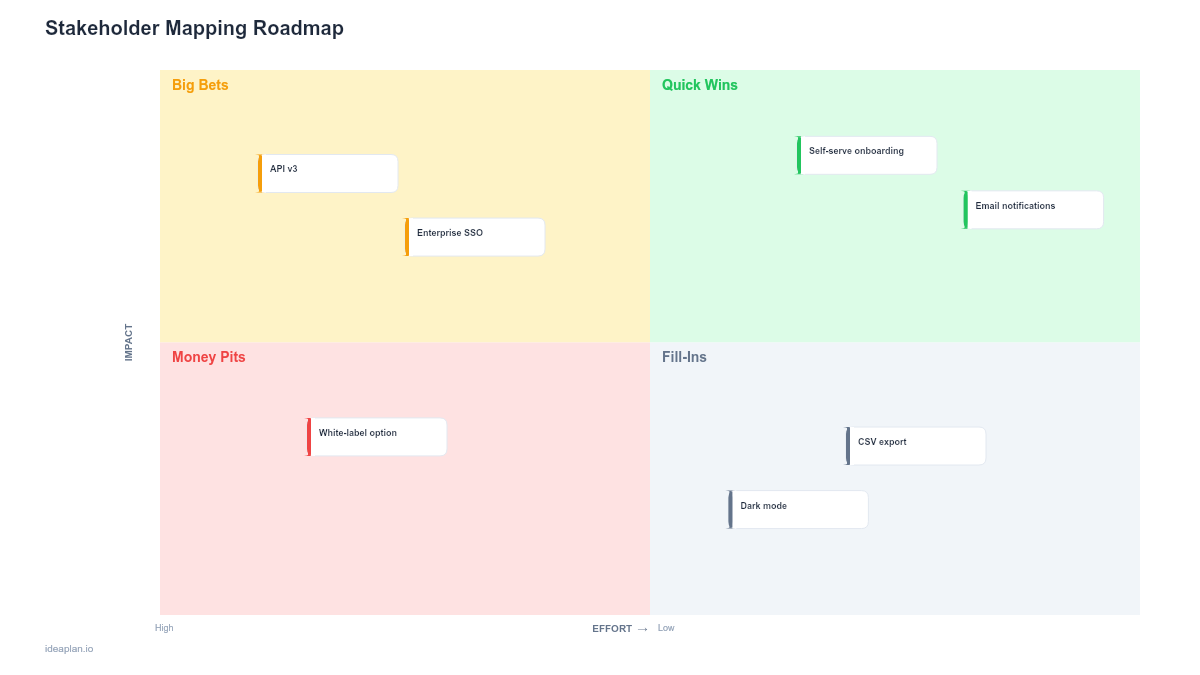
Before you can communicate with stakeholders, you need to know who they are and what they care about. This template maps stakeholders by influence level and interest level, then assigns a management strategy for each quadrant. High influence, high interest stakeholders get the most attention. Low influence, low interest stakeholders get periodic updates. The mapping exercise alone is valuable. Most product managers discover they have been over-investing in low-influence stakeholders and under-investing in the people who actually control resources and decisions.
Decision Log Roadmap
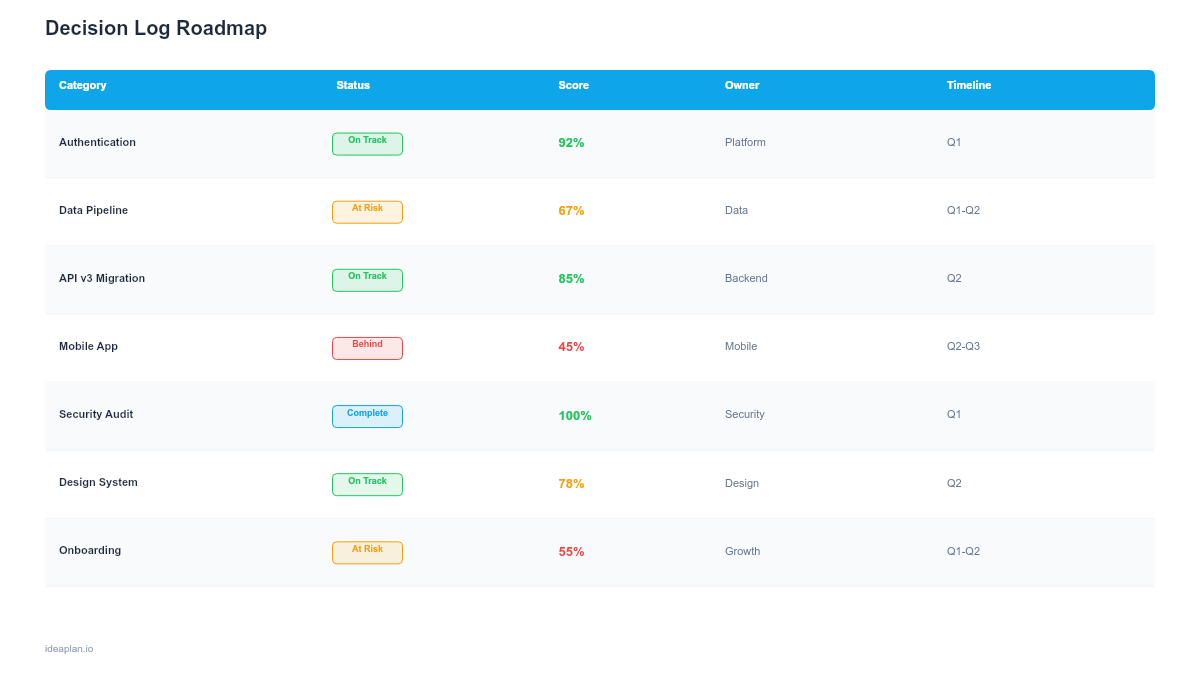
The decision log roadmap tracks major product decisions over time, documenting the decision, rationale, alternatives considered, who made it, and outcome. This creates institutional memory and prevents relitigating past decisions. For organizations where leadership changes or cross-functional teams need context on "why did we build it this way," this template becomes the source of truth.
Risk Register Roadmap
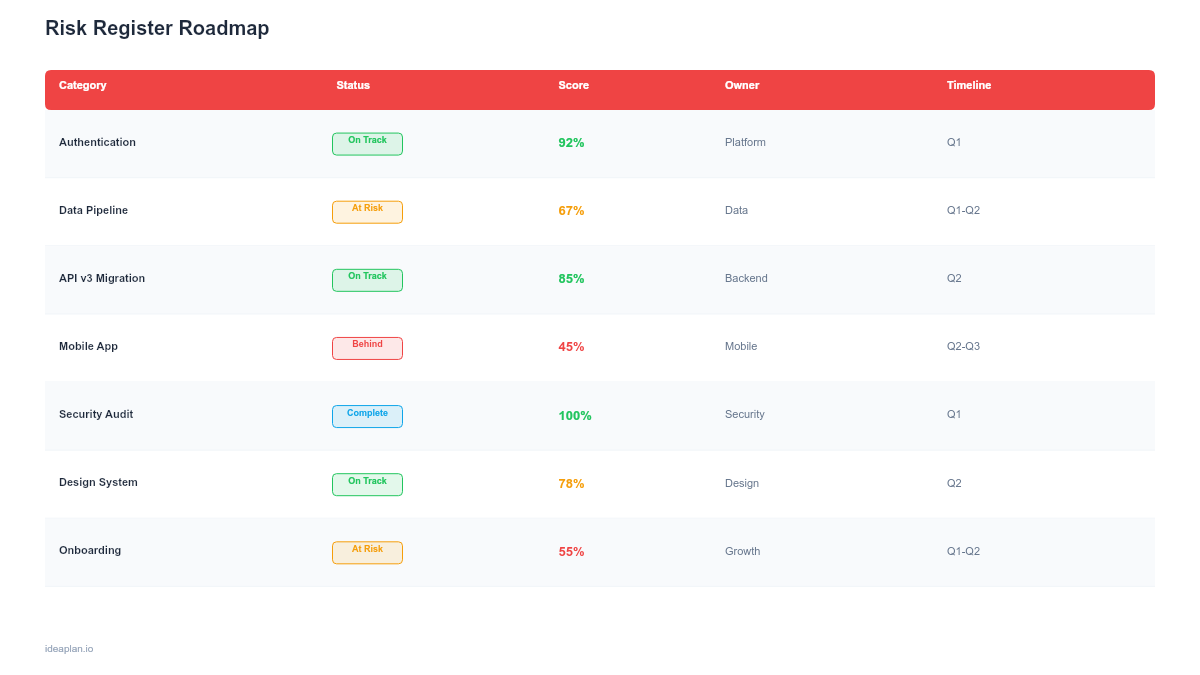
The risk register roadmap systematically tracks product, technical, and market risks alongside mitigation plans and contingency strategies. Each risk has an impact score, probability, mitigation owner, and status. This template turns risk management from reactive firefighting into proactive planning, giving executives visibility into what could go wrong before it does.
Portfolio-Level Planning
When one roadmap is not enough because you manage multiple products or product lines, these templates show the full picture.
Portfolio Roadmap (PowerPoint)
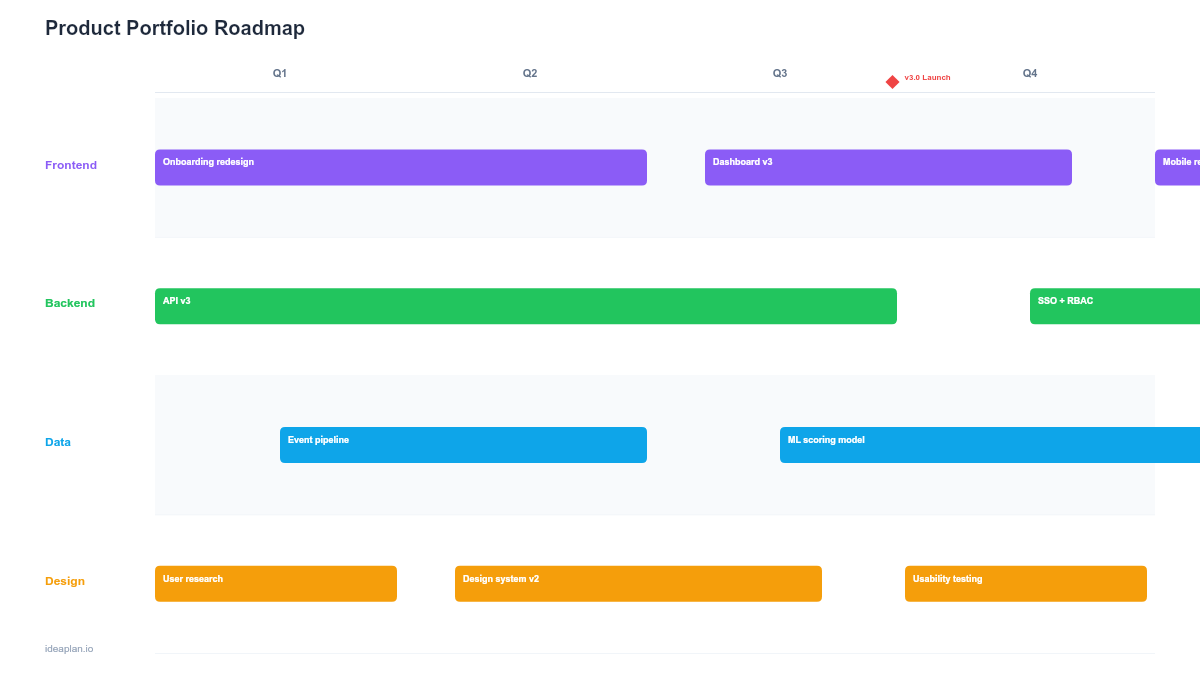
The portfolio roadmap displays multiple products or product lines on a single view, showing where investment is allocated, how timelines overlap, and where shared dependencies exist. It is the right template for VPs and CPOs who need to explain to the board how the product portfolio fits together. Each product gets a lane with its major initiatives, and cross-product dependencies are called out explicitly. See the portfolio roadmap guide for structuring multi-product plans.
Portfolio Roadmap (Google Sheets)
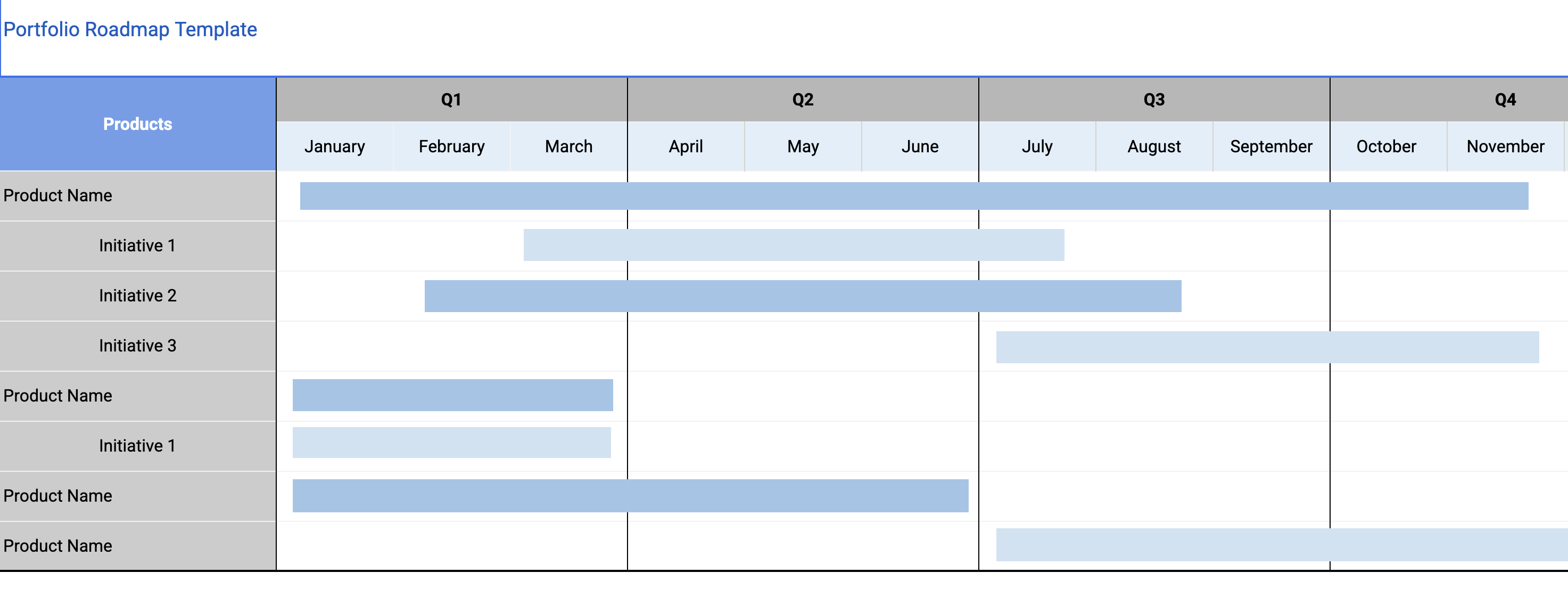
The Google Sheets version of the portfolio roadmap works better for ongoing management than the PowerPoint version. It is easier to update, supports formulas for tracking progress and resource allocation, and allows each product lead to maintain their own section. Use the Sheets version as the working document and export to PowerPoint or Slides when you need to present to the board.
Crisis Communication Roadmap
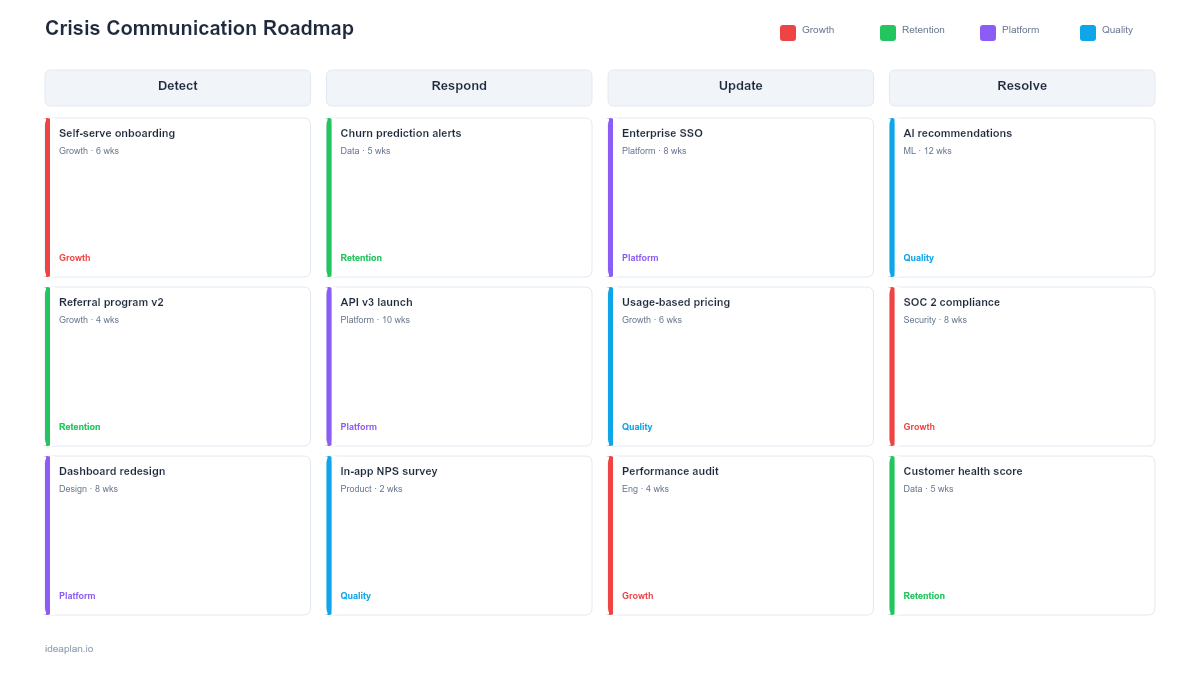
The crisis communication roadmap plans the response to critical incidents: customer communication sequences, internal stakeholder updates, external PR messaging, and post-incident review processes. It ensures your organization has a structured playbook before a crisis hits, with clear roles, escalation paths, and pre-approved messaging templates for different severity levels.
Vendor Evaluation Roadmap
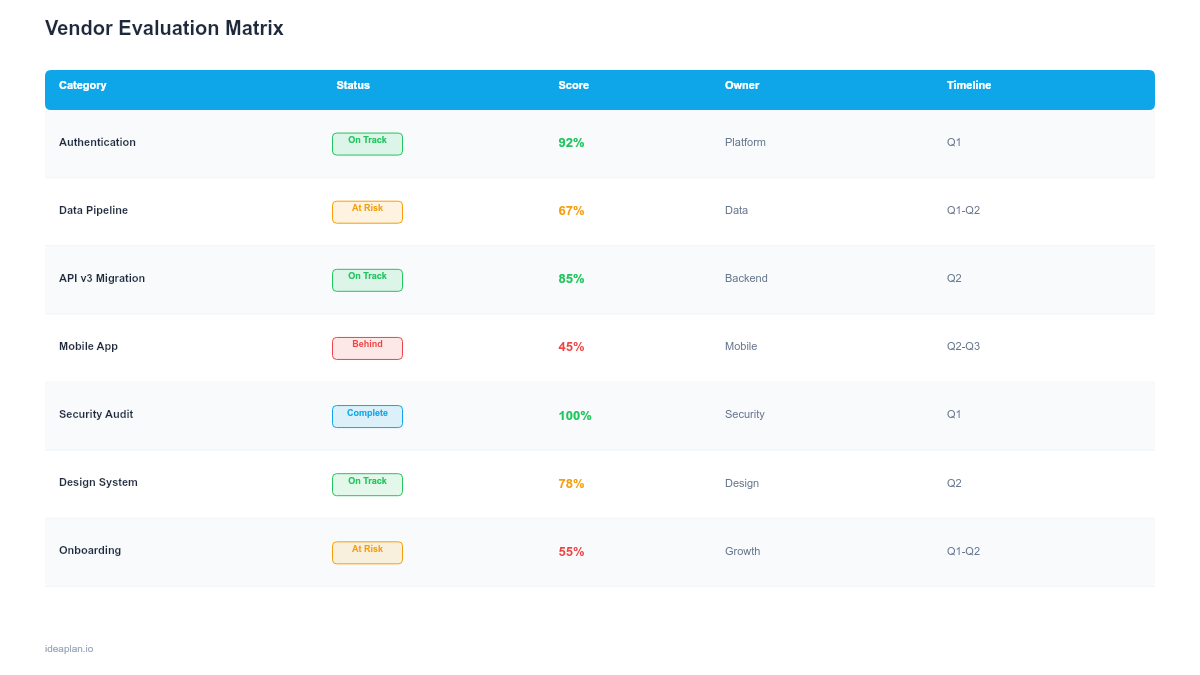
The vendor evaluation roadmap structures the process of selecting and onboarding third-party vendors or tools. It covers evaluation criteria, vendor comparison matrices, proof-of-concept timelines, contract negotiation milestones, and implementation phases. This template prevents vendor decisions from being made haphazardly and ensures proper due diligence before committing to multi-year contracts.
Which Executive Roadmap Template Should You Use?
Match the template to the meeting, not to your preference:
- Board meetings and investor updates → Investor Roadmap or Product Vision Roadmap. Frame everything in business outcomes.
- Quarterly planning and review cycles → QBR Roadmap (for the meeting) plus Quarterly Product Roadmap (for the artifact).
- Stakeholder alignment → Start with Stakeholder Mapping to identify who needs what, then use the Communication Roadmap to systematize your updates.
- Multi-product oversight → Portfolio Roadmap in Sheets for ongoing management, PowerPoint for presentations.
If you are presenting to a mixed audience (executives plus engineers), lead with the strategic view and have the detailed delivery roadmap ready as a backup. Never start with the sprint plan.
Explore More
- Top 8 Agile Frameworks for Product Teams (2026) - 8 agile frameworks compared side by side for product teams.
- Top 10 AI Tools for Product Managers (2026) - 10 AI-powered tools that save product managers hours every week.
- Top 15 Free Product Management Templates (2026) - 15 free PM templates covering roadmaps, PRDs, strategy docs, sprint plans, and retrospectives.
- Top 8 Product-Led Growth Frameworks (2026) - 8 product-led growth frameworks for PMs building self-serve growth engines.