These eighteen free product strategy roadmap templates cover OKR-aligned planning, outcome-based roadmaps, now-next-later prioritization, and domain-specific strategy planning for pricing, channels, content, and brand. All are free PowerPoint downloads compatible with Google Slides.
A strategy roadmap answers "why are we building this?" before "what are we building?" It organizes work by strategic intent (the outcomes you are trying to drive) rather than by features or timelines. When done well, it connects every initiative on the roadmap to a business outcome that leadership cares about. The product strategy handbook covers the thinking behind these formats. The templates here give you the artifact.
What are the best outcome and OKR-aligned roadmap templates?
These templates organize initiatives by the outcomes they drive rather than the features they deliver. Use them when your organization runs OKRs or when leadership evaluates the roadmap by asking "what will this achieve?" rather than "what will this ship?"
OKR Product Roadmap
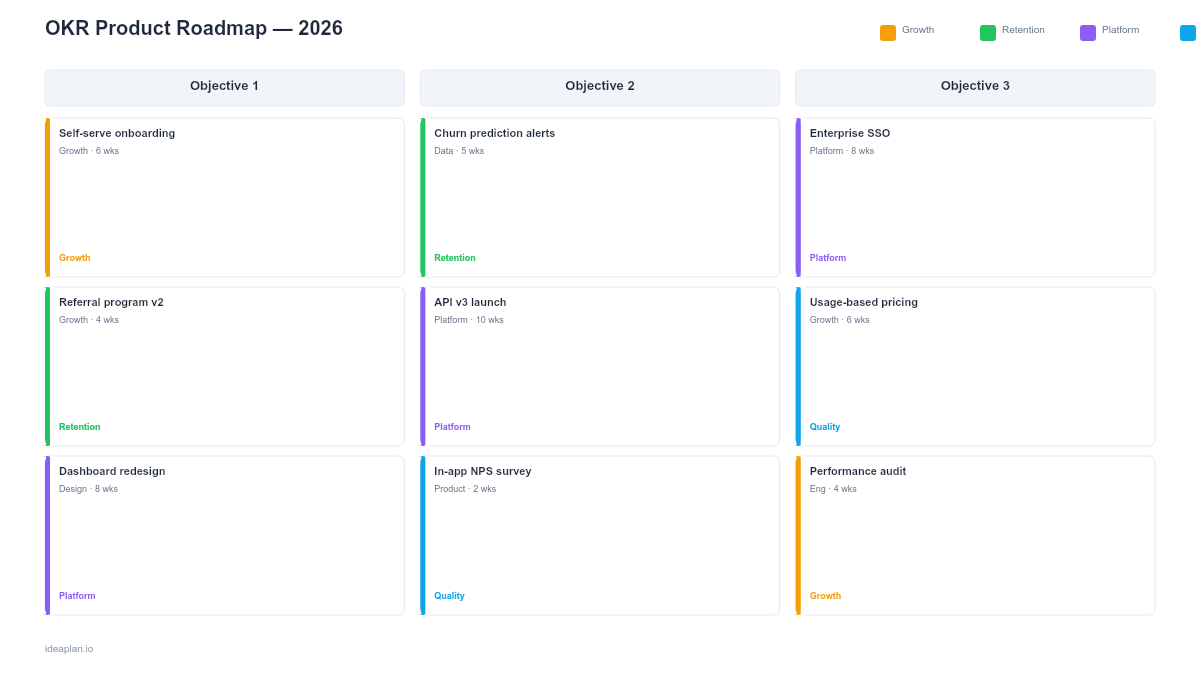
The OKR product roadmap directly maps objectives and key results to the initiatives that move them. Each objective gets a section with its key results, and each key result links to specific product initiatives with expected impact estimates. This format makes the connection between strategy and execution explicit. If an initiative does not connect to a key result, it surfaces the question of why it is on the roadmap. See the weighted scoring model for an alternative prioritization approach.
Outcome-Based Roadmap
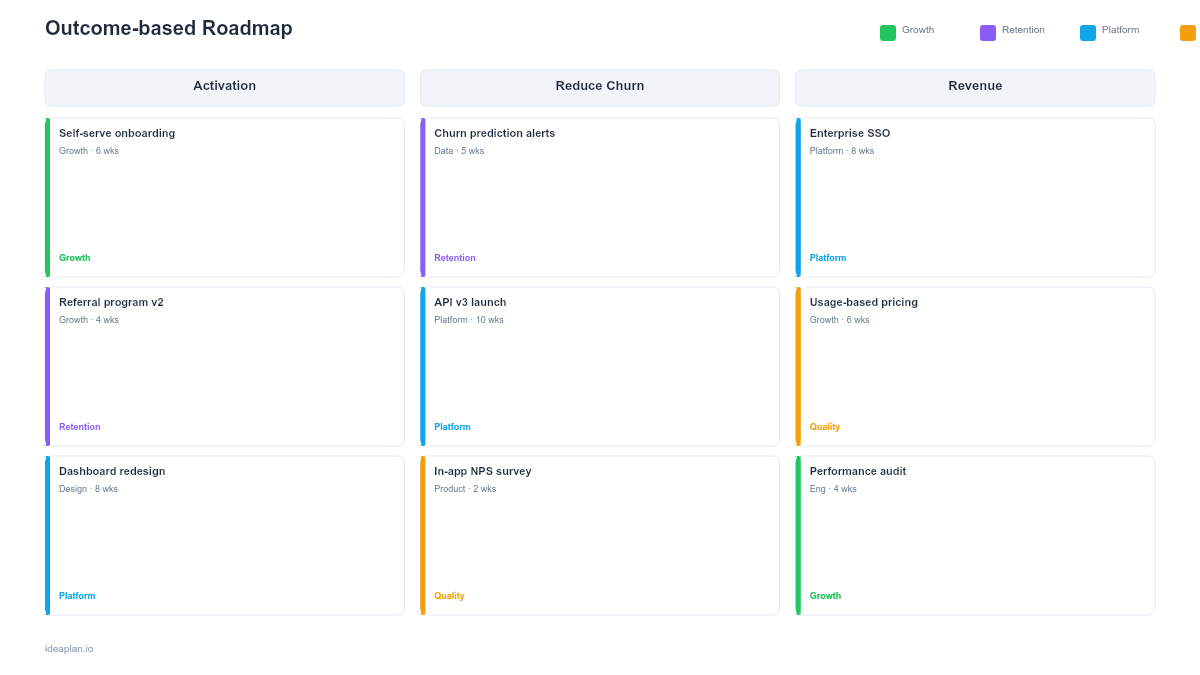
The outcome-based roadmap replaces feature lists with outcome statements. Instead of "Build search functionality," the roadmap says "Reduce time-to-find from 45 seconds to under 10 seconds." Each outcome includes a baseline metric, target metric, and the initiatives that the team believes will move the needle. This format keeps the team focused on results rather than output and gives leadership a clear way to evaluate whether the roadmap is working. The goals-based roadmap format explains the philosophy behind this approach.
Goals Roadmap (Google Sheets)
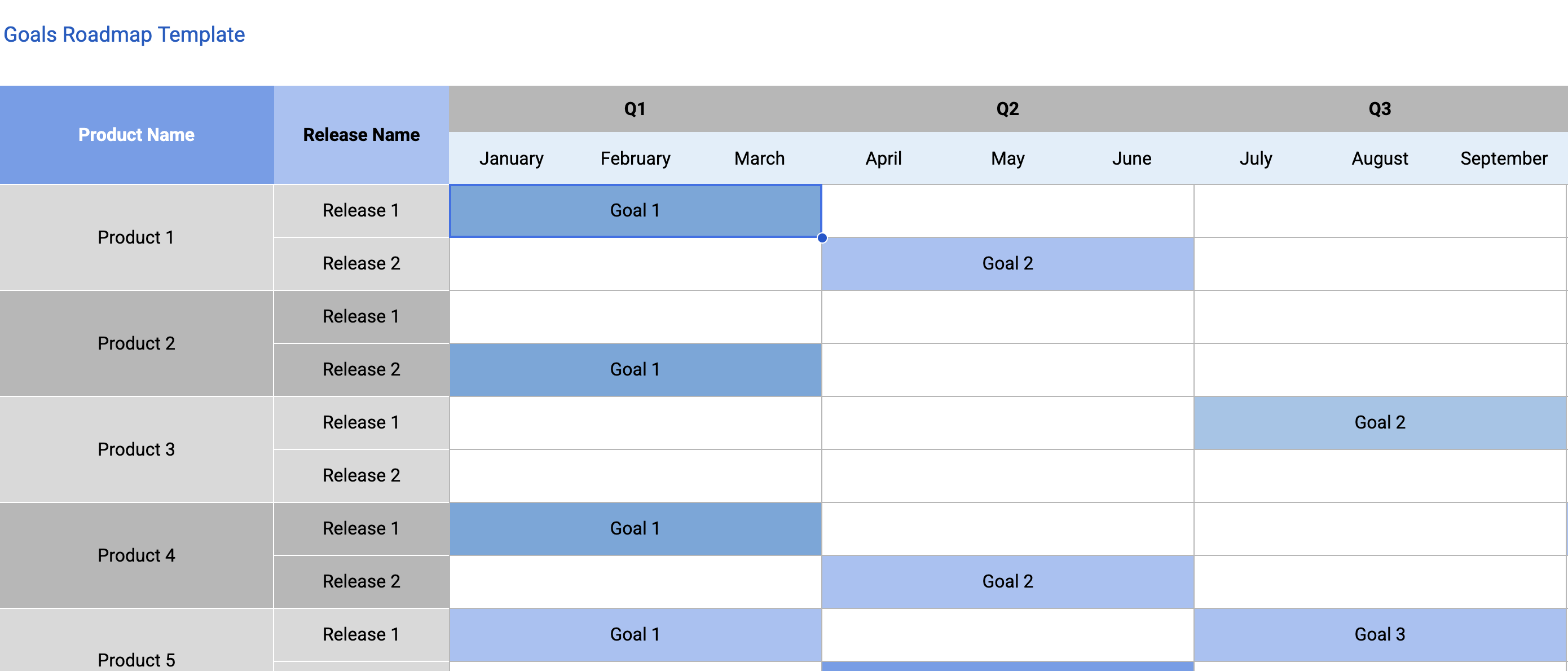
The Google Sheets goals roadmap combines the outcome-based approach with spreadsheet functionality. Goals live at the top of each column, with supporting initiatives listed below. Built-in formulas track progress against targets, and conditional formatting highlights goals that are on track, at risk, or behind. For teams that prefer working in spreadsheets over slides, this is the more practical format for day-to-day roadmap management.
Which templates help with prioritization?
These templates help you decide what to work on first. They impose a prioritization framework directly into the roadmap structure.
Now-Next-Later Roadmap (PowerPoint)
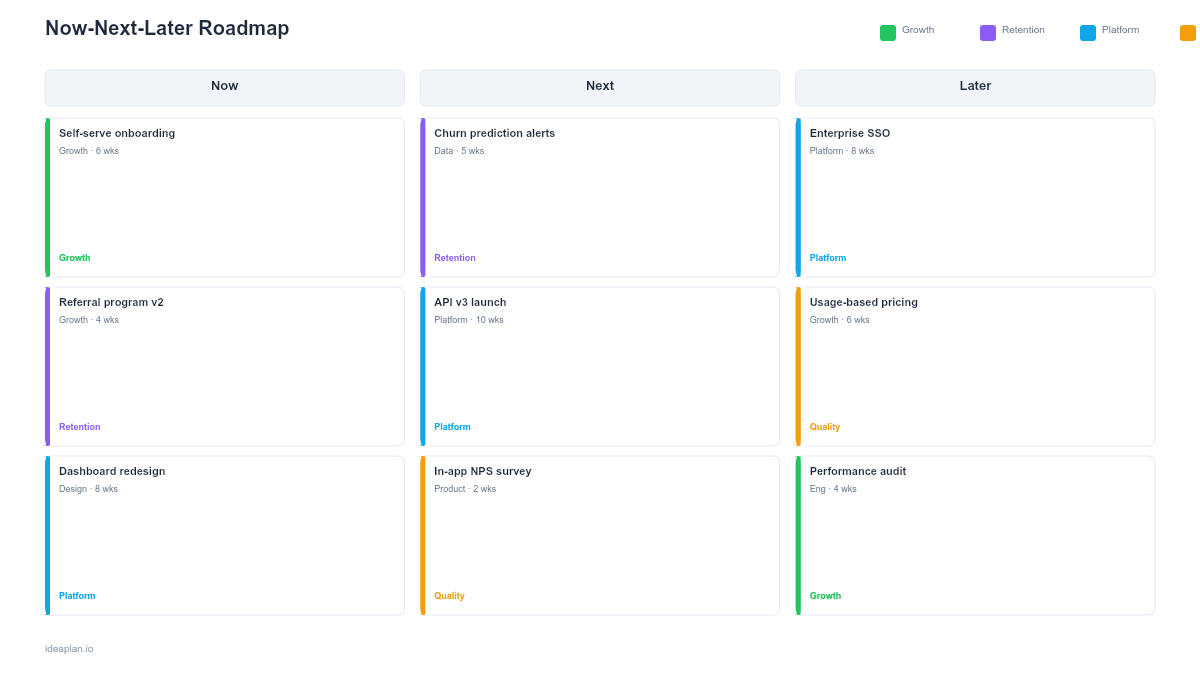
The now-next-later roadmap replaces rigid quarterly timelines with three priority buckets: what the team is working on now, what comes next, and what is on the horizon for later. The format acknowledges that your confidence in the plan decreases over time. "Now" items are committed, "next" items are planned, and "later" items are directional. This is the most popular roadmap format for product teams because it communicates intent without making date promises. The now-next-later format guide covers when to use this over timeline-based roadmaps.
Now-Next-Later Roadmap (Google Slides)
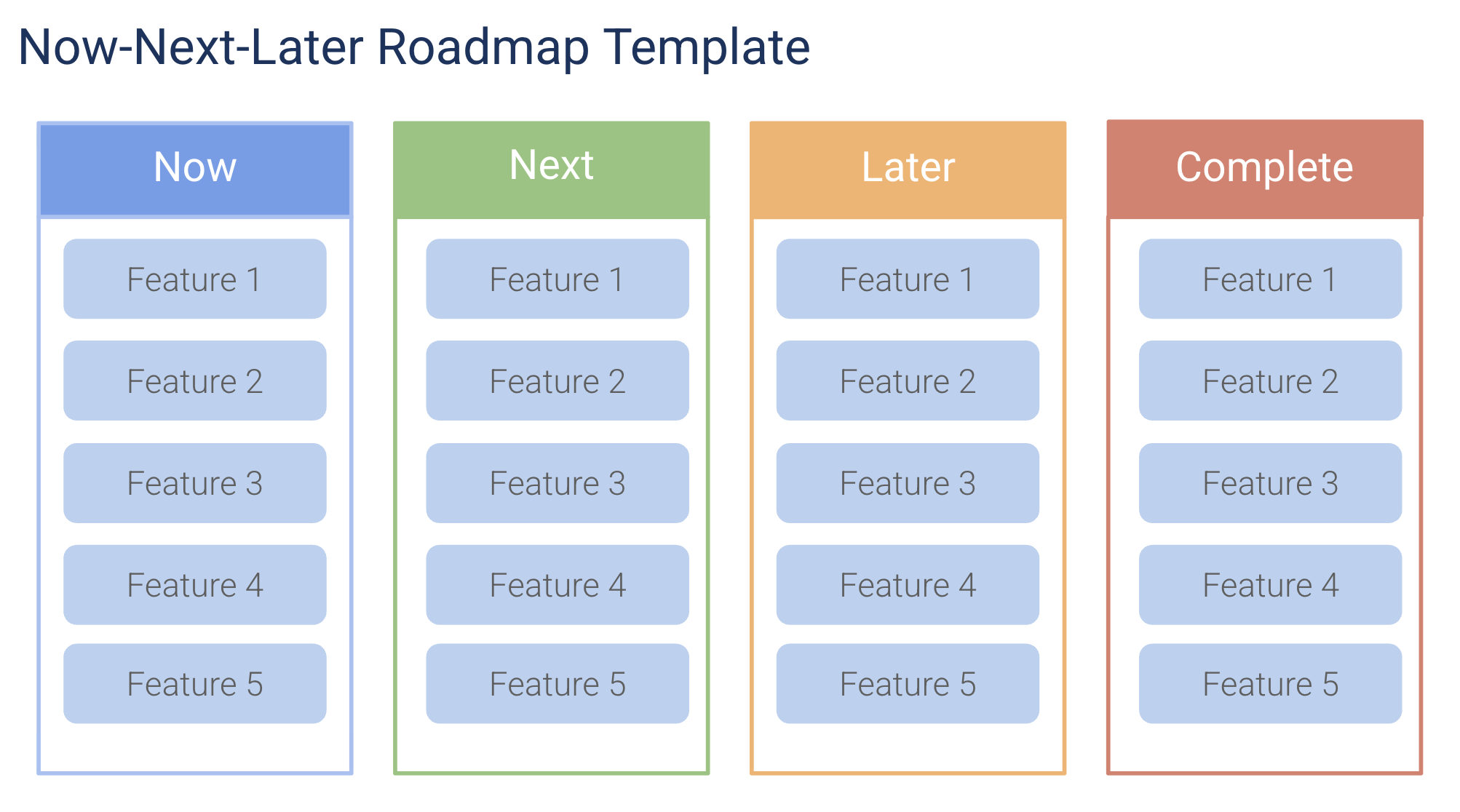
The Google Slides version is ideal for teams that present their roadmap in regular review meetings. The collaborative editing lets product managers update their section in real time, and the slide format controls pacing during presentations. Use this version when the roadmap is primarily a communication tool shared with stakeholders.
Theme-Based Roadmap
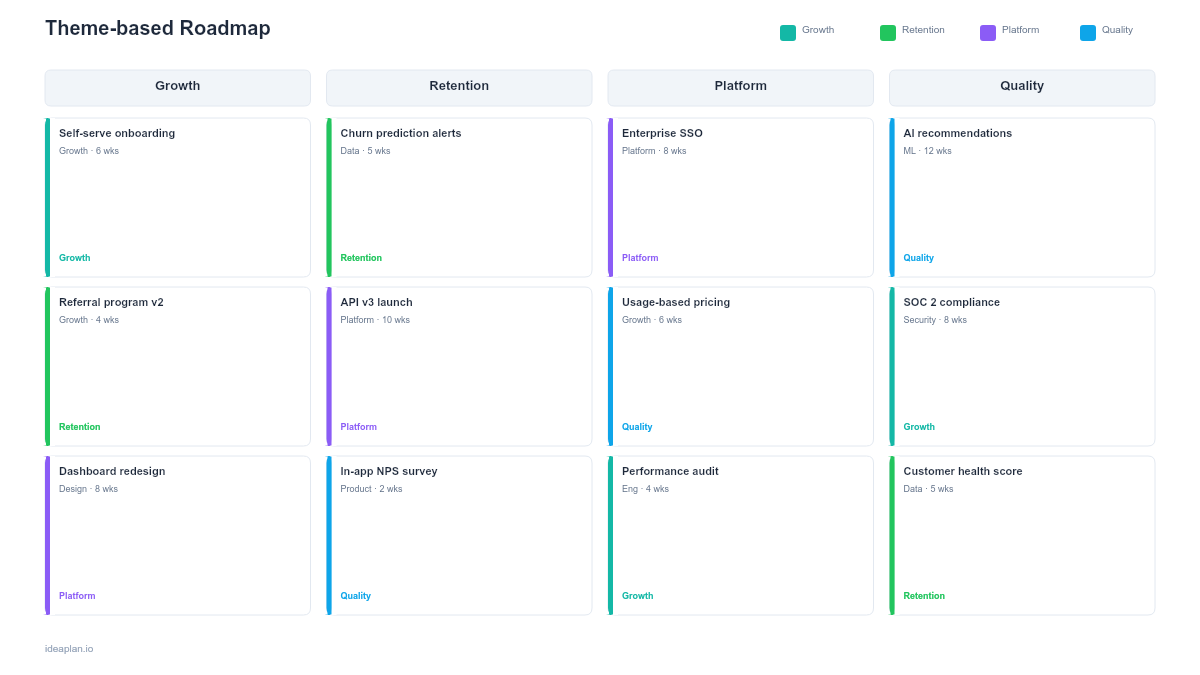
The theme-based roadmap groups initiatives under strategic themes (Growth, Retention, Platform Stability, Developer Experience, or whatever themes your strategy defines). Each theme gets equal visual weight, which forces a conversation about investment balance. If 80% of your initiatives fall under one theme, the roadmap makes that concentration visible and prompts a deliberate decision about whether that is intentional. Use the RICE calculator to score individual initiatives within each theme.
Now-Next-Later-Trash Roadmap
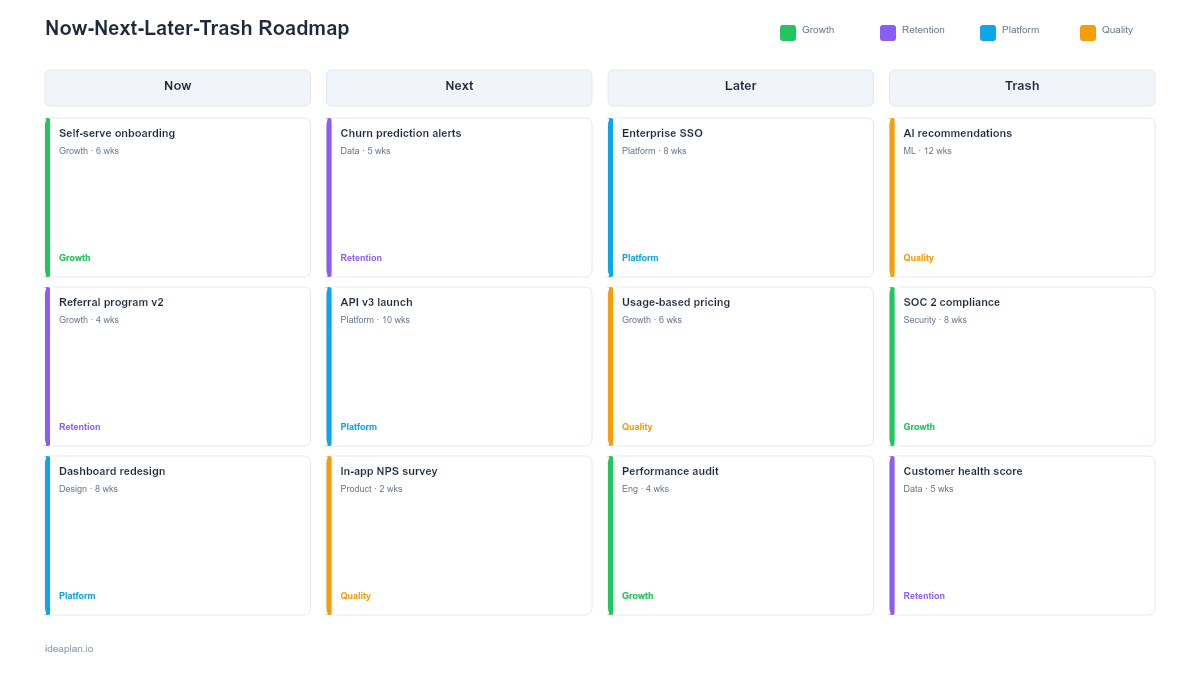
The now-next-later-trash roadmap extends the classic now-next-later format with a "trash" column for ideas that will not be built. Making explicit what you are not doing is as valuable as showing what you are building. This format prevents dead ideas from lingering in the backlog and sets clear expectations with stakeholders about what will not happen.
Prioritized Product Roadmap
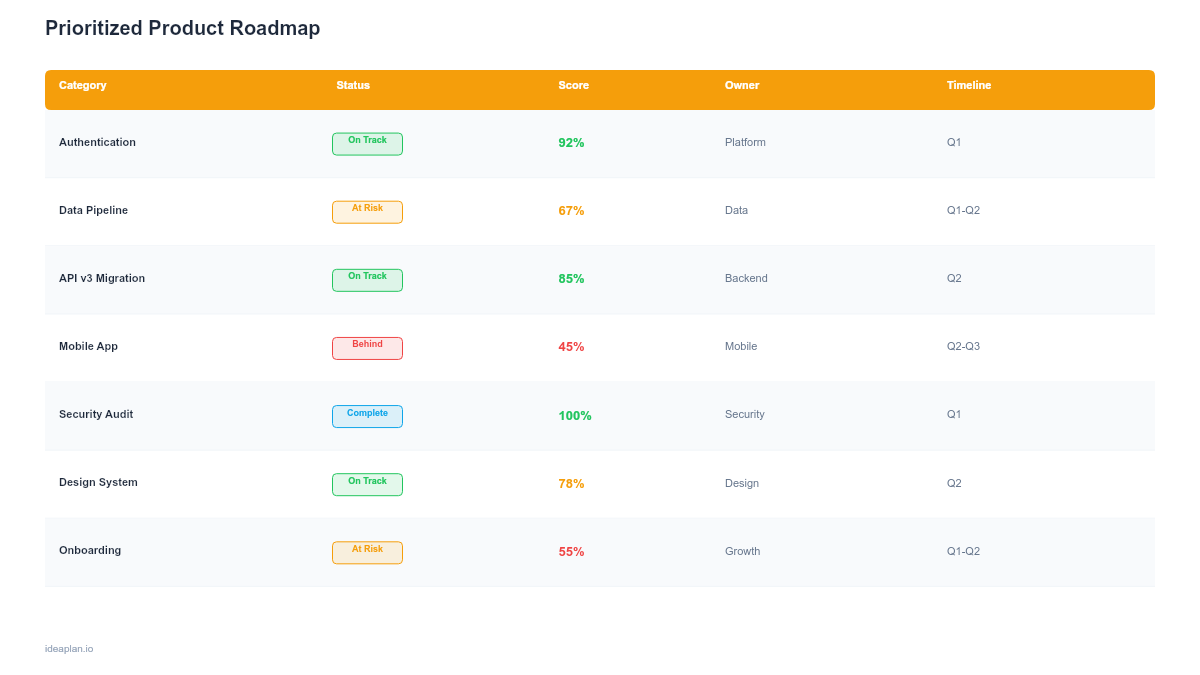
The prioritized product roadmap displays initiatives in rank order by strategic value, using a scoring system to determine what comes first. Each initiative shows its score, strategic rationale, and dependencies. This format makes prioritization decisions transparent and defensible. When stakeholders ask "Why isn't my feature next?" the roadmap provides a data-driven answer.
Product Decomposition Roadmap
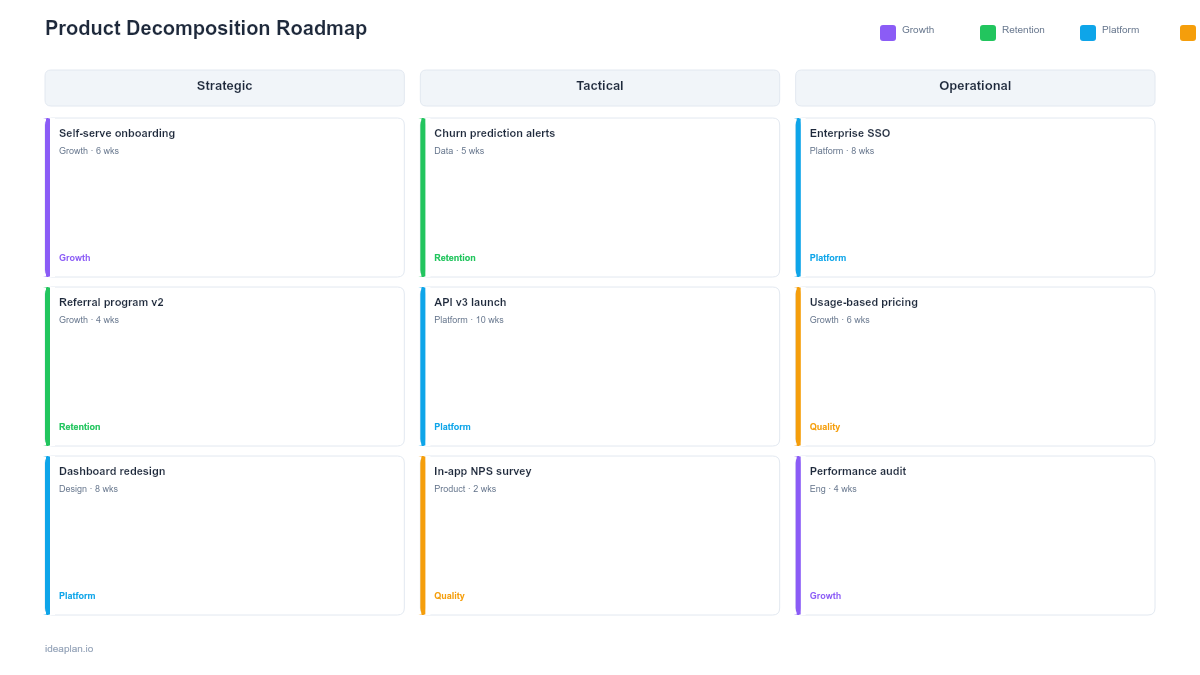
The product decomposition roadmap breaks complex products into capability layers (platform, core features, integrations, developer tools) and plans evolution at each layer. Each capability layer shows current state, planned improvements, and technical dependencies. This template is essential for platform products or multi-sided marketplaces where different parts of the product evolve at different rates.
Value Stream Roadmap
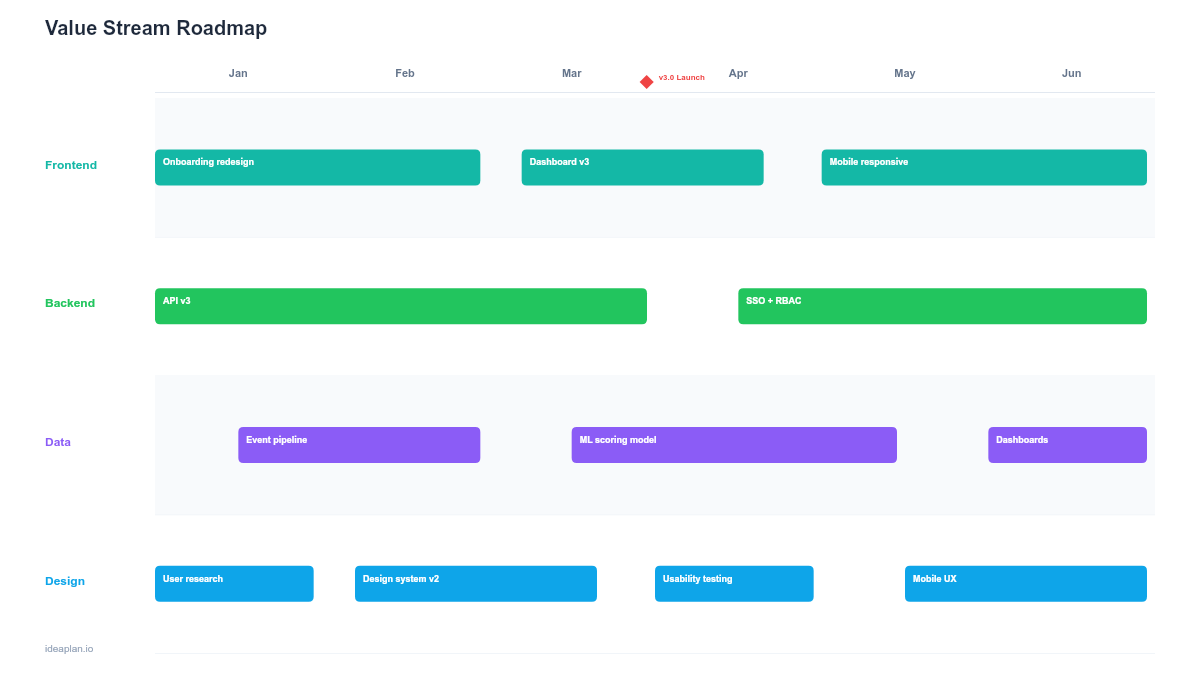
The value stream roadmap maps product initiatives to the end-to-end customer value stream, from awareness through purchase to retention. Each stage of the customer journey shows planned improvements and their expected impact on conversion or engagement metrics. This format ensures the roadmap addresses the full customer lifecycle rather than optimizing isolated touchpoints.
What domain-specific strategy roadmap templates are available?
These templates apply the strategy roadmap format to specific business domains. Each one includes domain-specific sections and metrics that a generic strategy template would miss.
Product Strategy Roadmap
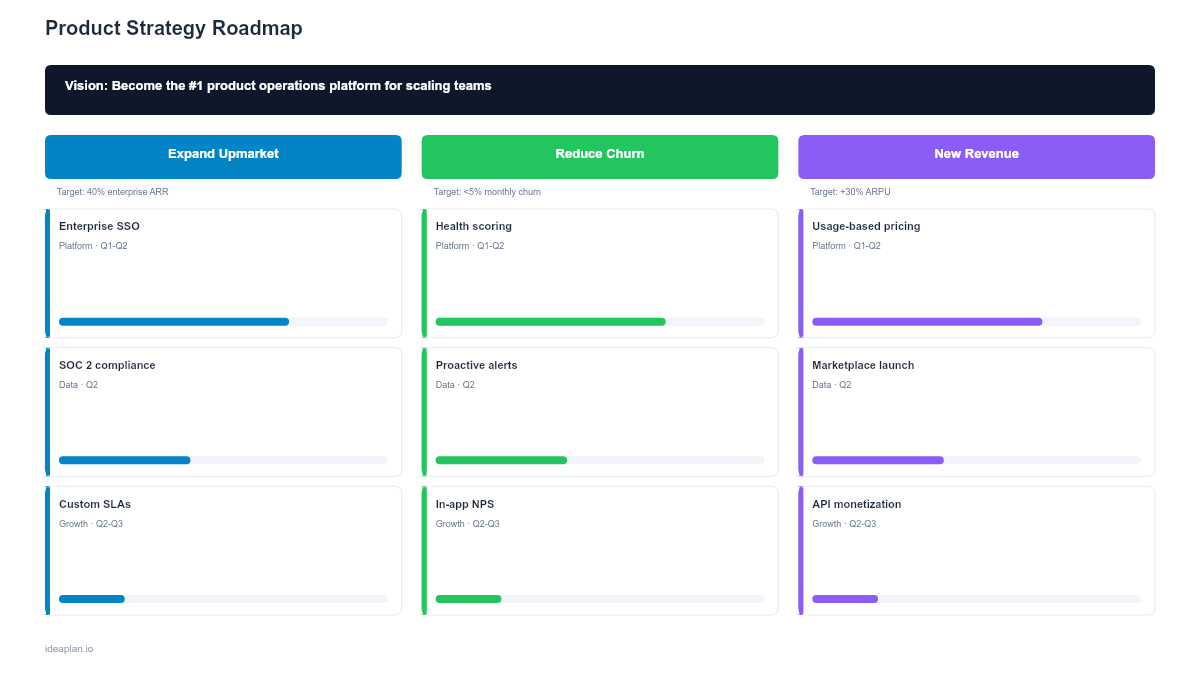
The product strategy roadmap is the general-purpose strategy template. It structures the roadmap around strategic pillars with initiatives listed under each, plus a timeline layer showing when each initiative lands. This is the Swiss Army knife of strategy templates. Use it when no domain-specific template fits or when you need a single artifact that covers the full product strategy. It maps cleanly to the product strategy guide framework.
Pricing Strategy Roadmap
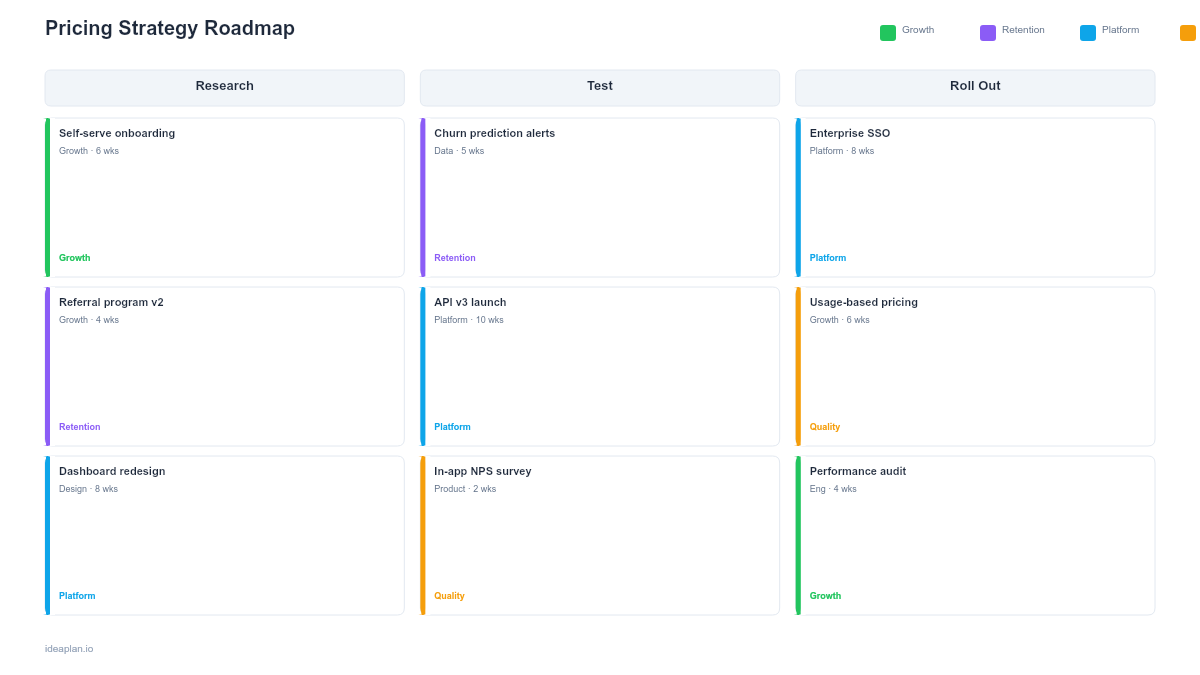
Pricing changes are high-impact, high-risk product decisions that deserve their own roadmap. This template plans pricing experiments, tier restructuring, discount strategy changes, and monetization model shifts with rollout phases and revenue impact projections. It includes a customer impact assessment for each pricing change and a rollback plan for experiments that do not work. For SaaS products, pricing is often the most impactful product decision you can make.
Brand Strategy Roadmap
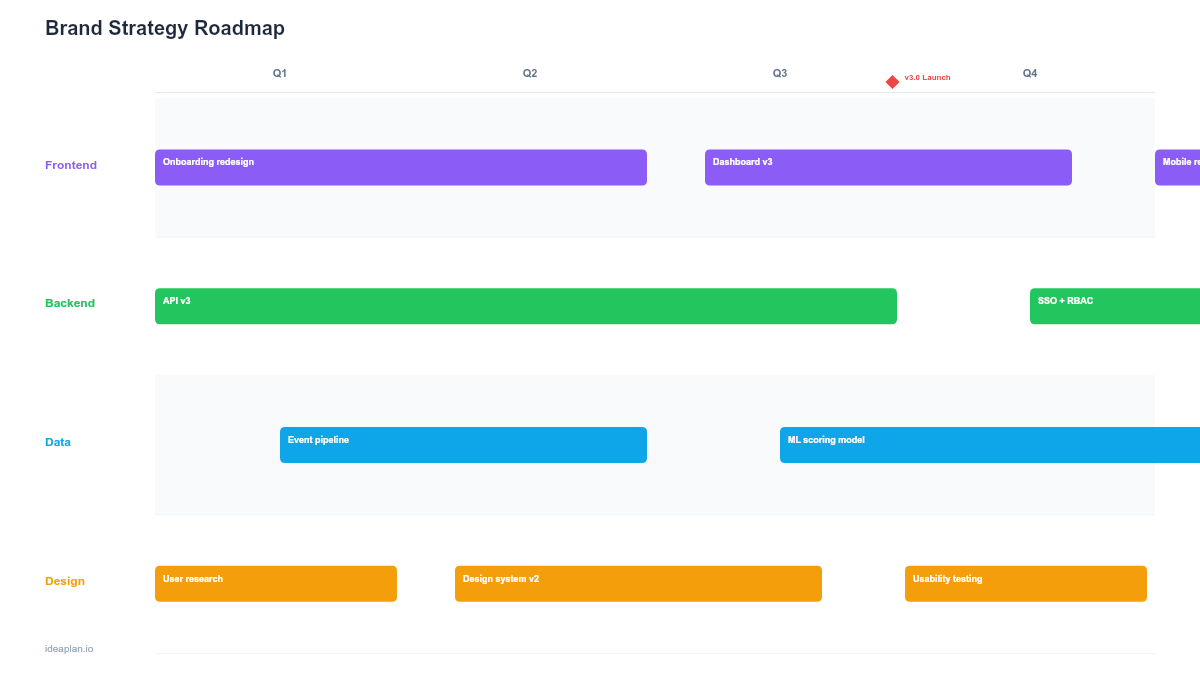
The brand strategy roadmap plans brand-level initiatives: positioning updates, visual identity refreshes, messaging framework changes, and brand perception campaigns. Product managers rarely own brand directly, but brand decisions affect product decisions. Naming, in-product messaging, onboarding tone, and support voice all connect to brand strategy. This template is for teams where product and brand need to coordinate.
Channel Strategy Roadmap
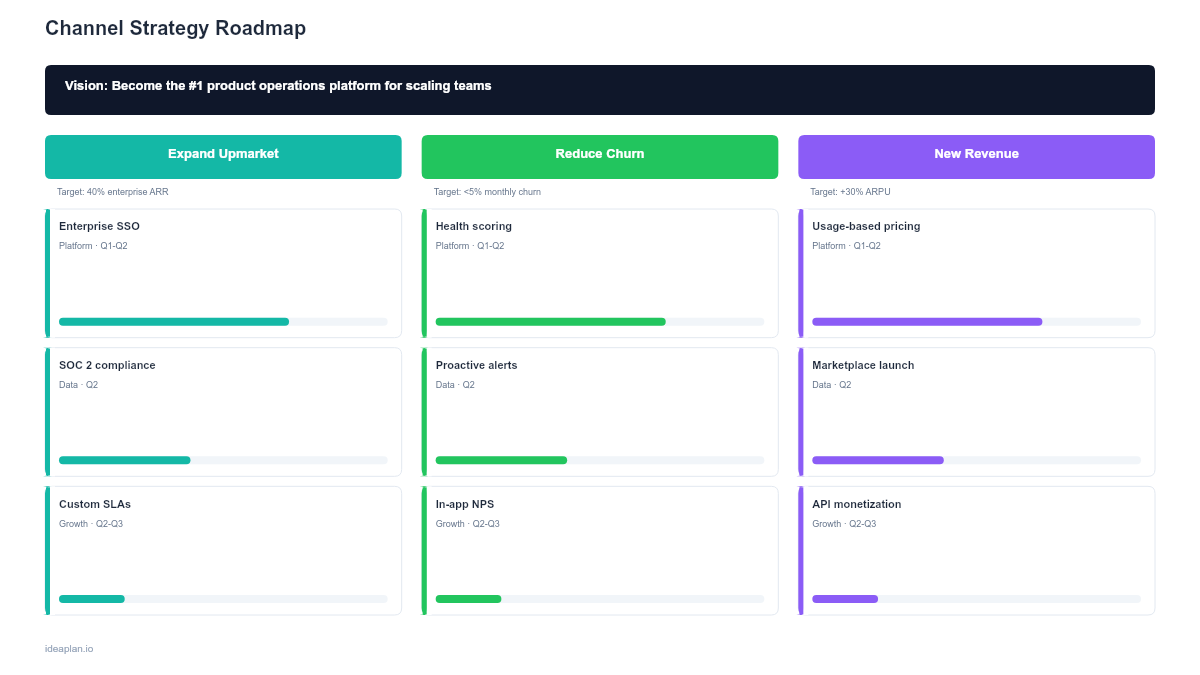
The channel strategy roadmap plans how you reach customers through different distribution channels: direct sales, self-serve, partner channels, marketplaces, or resellers. Each channel gets a development plan with milestones, investment requirements, and expected contribution to pipeline or revenue. This template is relevant for products expanding beyond a single go-to-market motion.
Content Strategy Roadmap
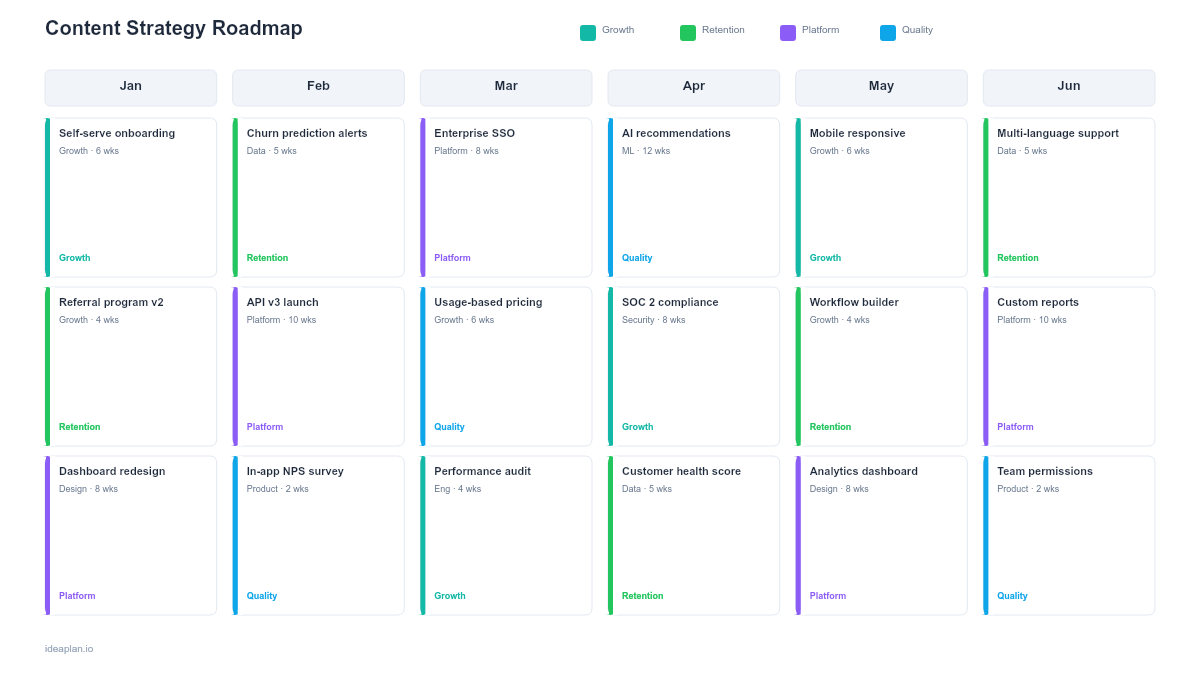
The content strategy roadmap plans content production across channels: blog, documentation, video, social, email, and events. It connects content themes to product launches, seasonal trends, and audience segments. For product-led companies where content drives acquisition, this template coordinates content with the product roadmap so launches and content campaigns reinforce each other.
Vertical Strategy Roadmap
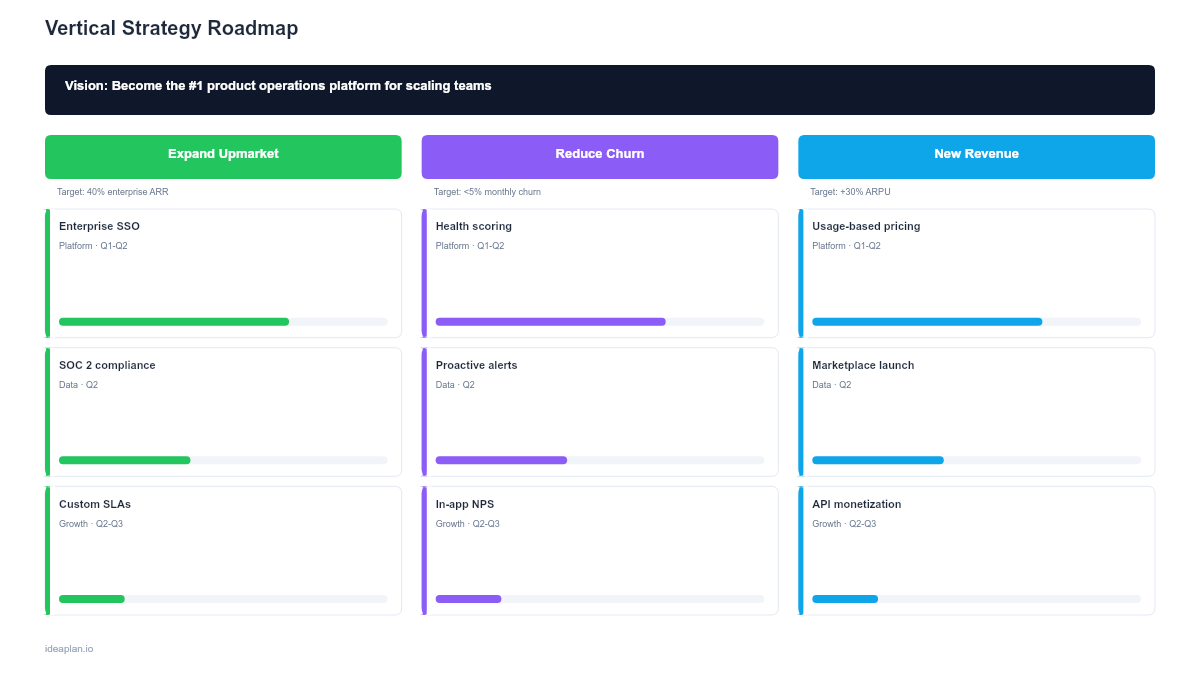
The vertical strategy roadmap plans expansion into specific industry verticals. Each vertical gets a section with market size, required product changes, go-to-market approach, and revenue targets. This template is for horizontal products expanding into vertical markets, a common growth strategy for mid-stage SaaS companies that need to deepen their value in specific industries.
Sustainability Roadmap
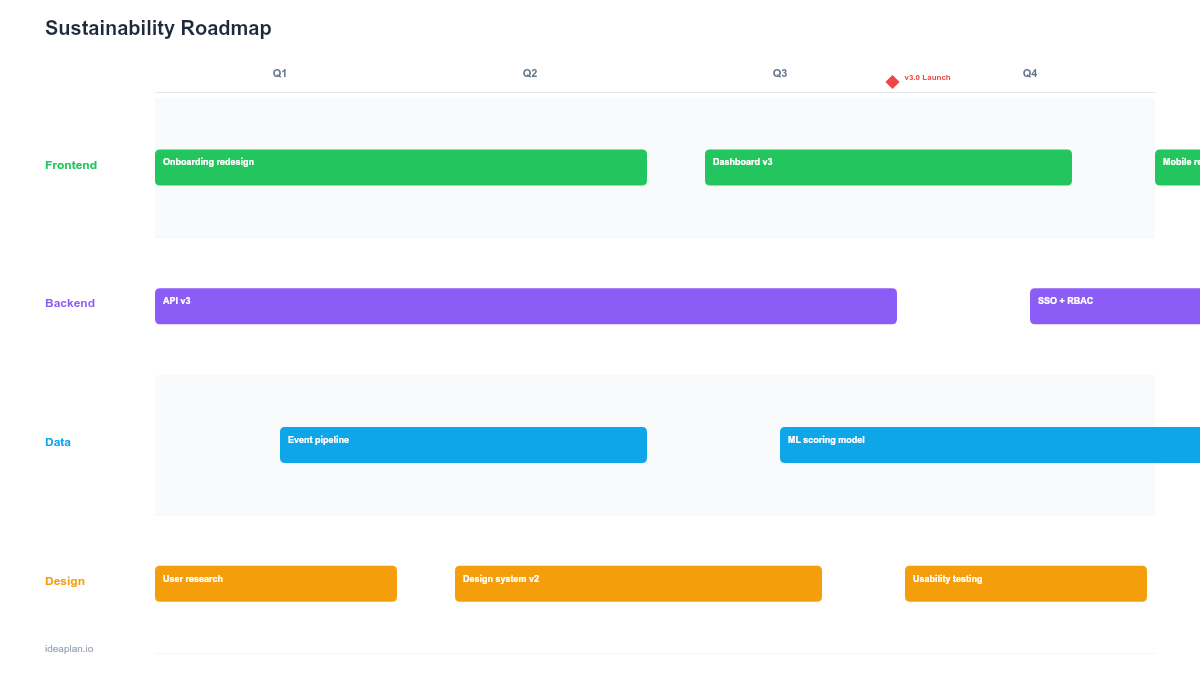
The sustainability roadmap plans environmental, social, and governance (ESG) initiatives: carbon footprint reduction, ethical sourcing, diversity and inclusion programs, and transparent reporting. For companies where sustainability is a strategic differentiator or regulatory requirement, this template ensures ESG commitments translate into concrete product and operational changes.
Talent Acquisition Roadmap
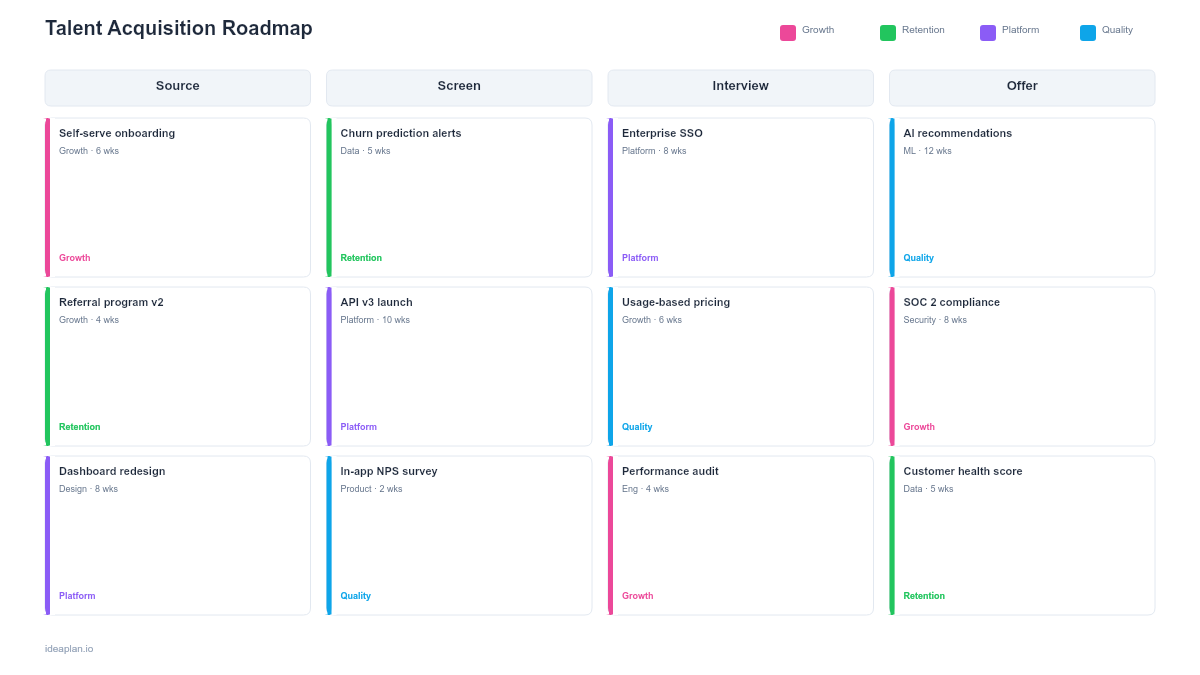
The talent acquisition roadmap plans hiring strategy, recruitment process optimization, employer branding, and team composition changes. It connects hiring plans to product strategy by showing which roles are needed when and why. This template is essential for scaling product organizations where hiring velocity and quality determine execution capacity.
How do you choose the right strategy template?
Start with the question your roadmap needs to answer:
- "What outcomes are we targeting?" → OKR Product Roadmap or Outcome-Based Roadmap
- "What should we work on first?" → Now-Next-Later Roadmap or Theme-Based Roadmap
- "How are we investing across strategic bets?" → Product Strategy Roadmap or Theme-Based Roadmap
- "How do we grow into new segments?" → Vertical Strategy or Channel Strategy Roadmap
- "How do we change our pricing?" → Pricing Strategy Roadmap
For most product teams, the Now-Next-Later Roadmap is the best starting point. It is the simplest format that communicates strategic intent without requiring a full OKR infrastructure. Graduate to the OKR or Outcome-Based template when your organization adopts formal goal-setting.
Explore More
- Top 10 OKR Resources for Product Teams (2026) - 10 OKR tools, frameworks, and guides for product teams.
- Top 8 Agile Frameworks for Product Teams (2026) - 8 agile frameworks compared side by side for product teams.
- Top 10 AI Tools for Product Managers (2026) - 10 AI-powered tools that save product managers hours every week.
- Top 15 Free Product Management Templates (2026) - 15 free PM templates covering roadmaps, PRDs, strategy docs, sprint plans, and retrospectives.