SaaS products face planning challenges that other product types do not. Free trials create time pressure. Self-serve funnels need continuous optimization. Expansion revenue depends on feature adoption, not just feature delivery. And the gap between acquisition and activation can destroy unit economics if onboarding does not convert trial users into paying customers.
These seventeen templates are built for the specific planning needs of SaaS teams: feature prioritization, self-serve optimization, adoption funnel management, engagement loop design, marketplace and mobile growth channels, and the enterprise infrastructure work needed to scale upmarket. For a broader guide on SaaS roadmap strategy, see how to build a SaaS product roadmap. The Product-Led Growth Handbook covers the growth strategy that these templates support.
Feature Planning and Prioritization
These templates structure the core product planning work: deciding what to build and in what order.
SaaS Product Roadmap
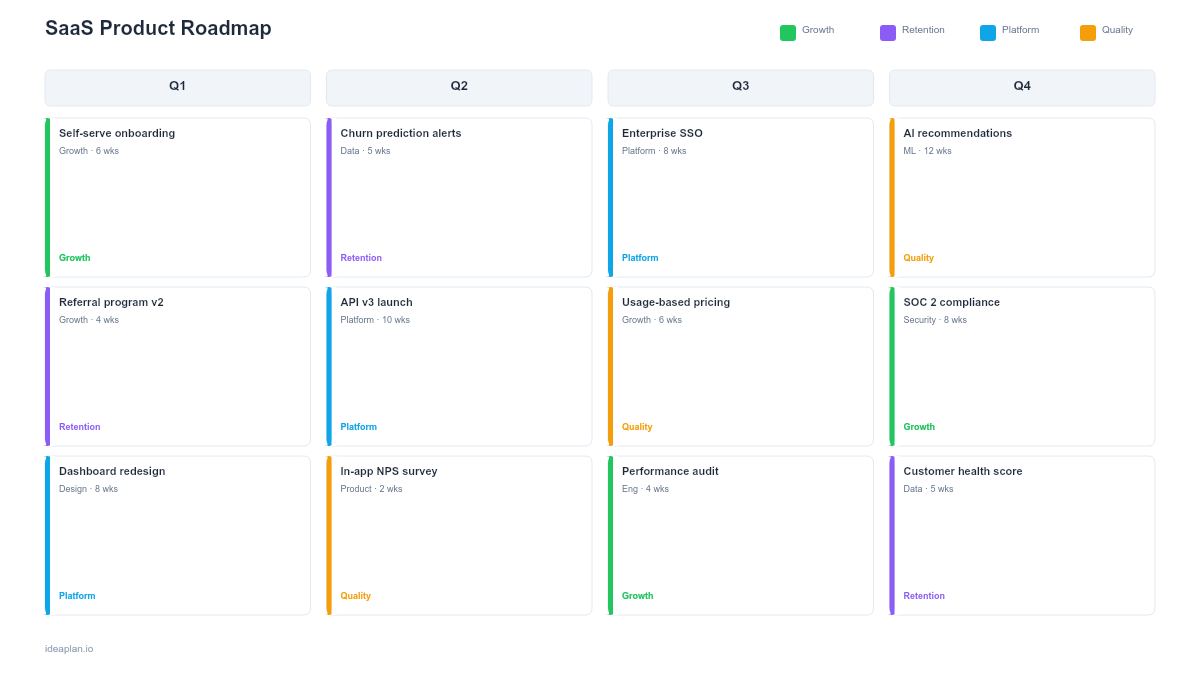
The SaaS product roadmap is a general-purpose template designed for recurring revenue products. It includes sections standard roadmaps skip: tier-specific features (which features are free, which are paid), usage-based metric targets, and expansion revenue opportunities per feature. Every initiative on the roadmap connects to a SaaS metric (MRR impact, activation rate, or retention lift) so prioritization decisions are data-driven rather than opinion-driven.
Feature Prioritization Matrix Roadmap
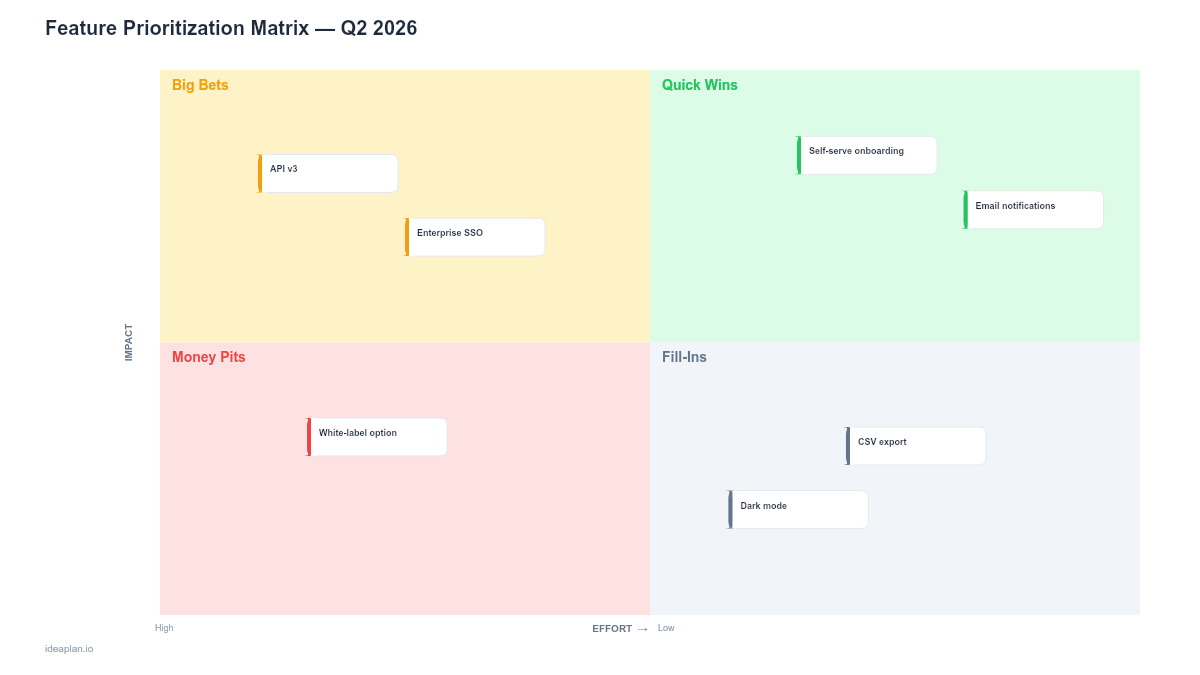
The feature prioritization matrix roadmap combines a scoring matrix with a timeline view. Features are scored across dimensions (customer demand, revenue impact, effort, strategic alignment) and then plotted on a timeline based on their priority score. This template makes the prioritization logic transparent: stakeholders can see not just what is planned but why it was prioritized over other options. Use the RICE calculator alongside this template for structured scoring.
Product Feature Roadmap (Google Sheets)
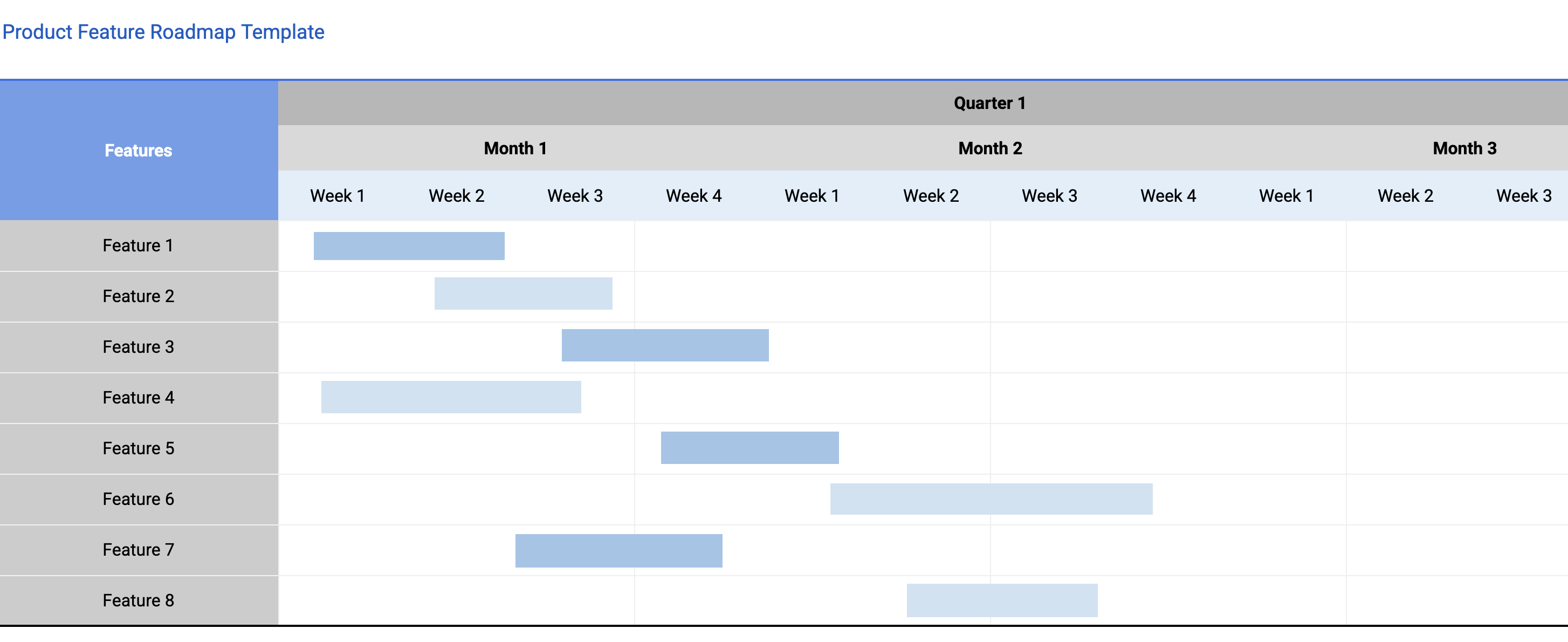
The Google Sheets feature roadmap is the day-to-day working document for SaaS product teams. It supports formula-driven prioritization, conditional formatting for status tracking, and filtering by category, owner, or quarter. For teams that manage their roadmap as a living spreadsheet updated weekly, this is the most practical format. The step-by-step Google Sheets guide shows how to customize it.
Product Feature Roadmap (Google Slides)
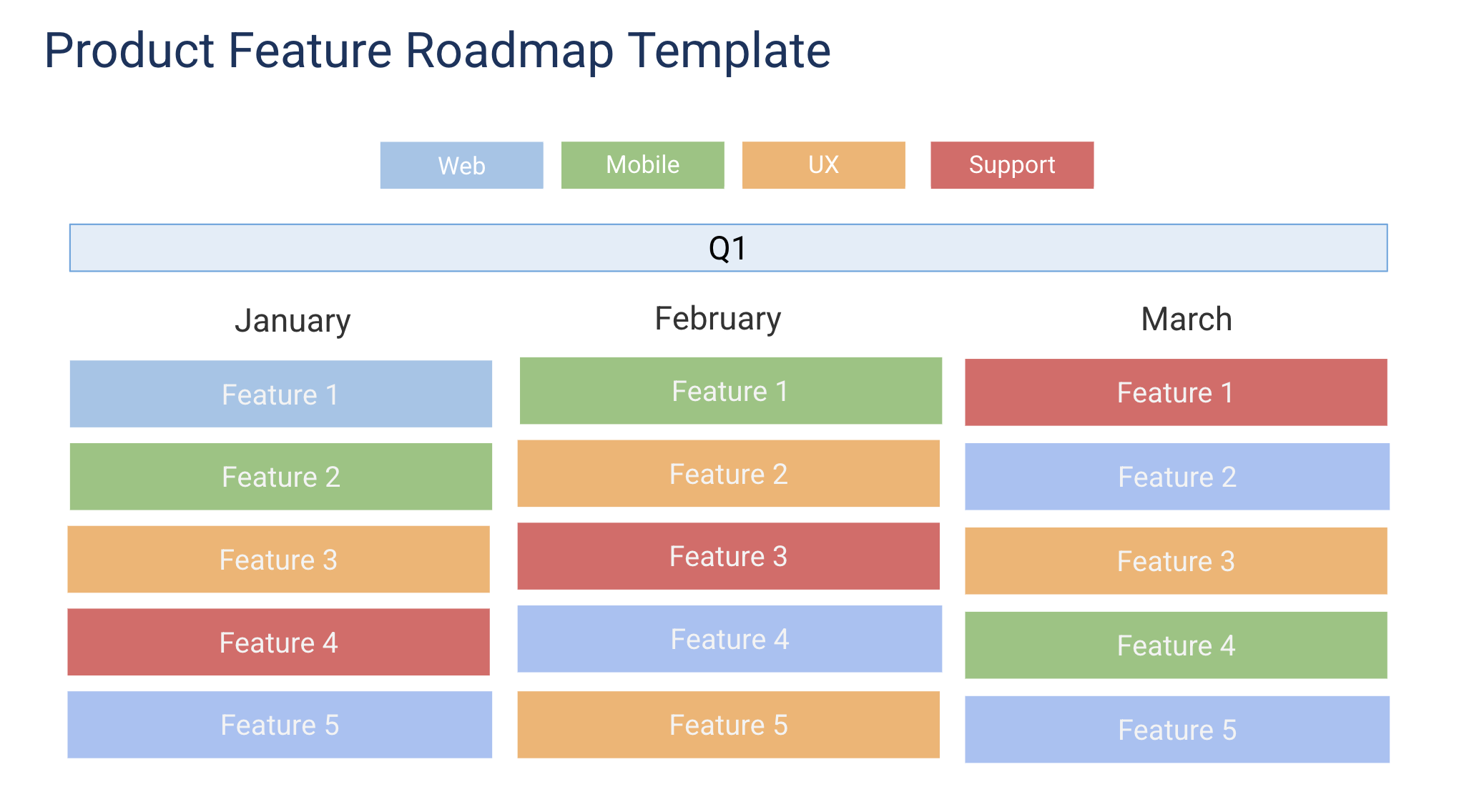
The presentation version of the feature roadmap, designed for stakeholder meetings and sprint reviews. It shows planned features organized by theme or quarter with status indicators and ownership. Use this when you need to present the roadmap in a meeting rather than sharing a spreadsheet link.
Self-Serve and Product-Led Growth
These templates plan the self-serve experience that product-led growth companies depend on.
Self-Serve Roadmap
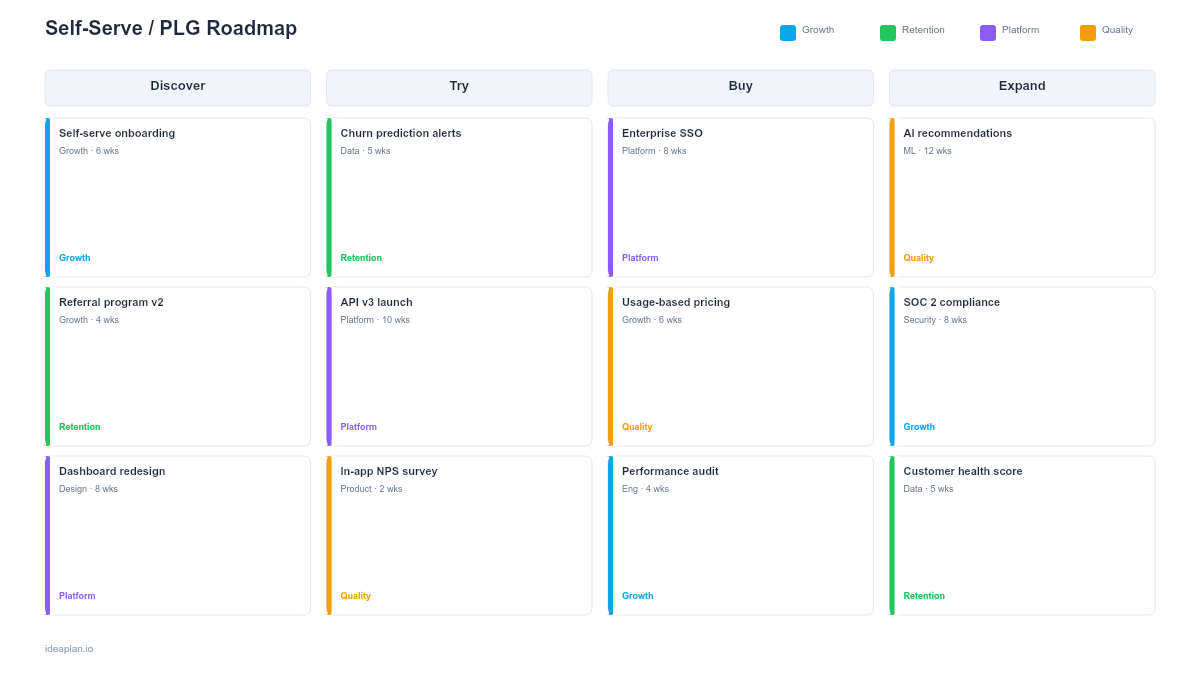
The self-serve roadmap plans every touchpoint in the self-serve buyer journey: signup flow, onboarding, activation triggers, upgrade prompts, and billing management. Each touchpoint has conversion rate targets and improvement experiments. For PLG companies where the product is the primary sales channel, this roadmap is more important than the feature roadmap. A beautiful product that nobody can activate on their own is a beautiful product that does not grow.
Adoption Funnel Roadmap
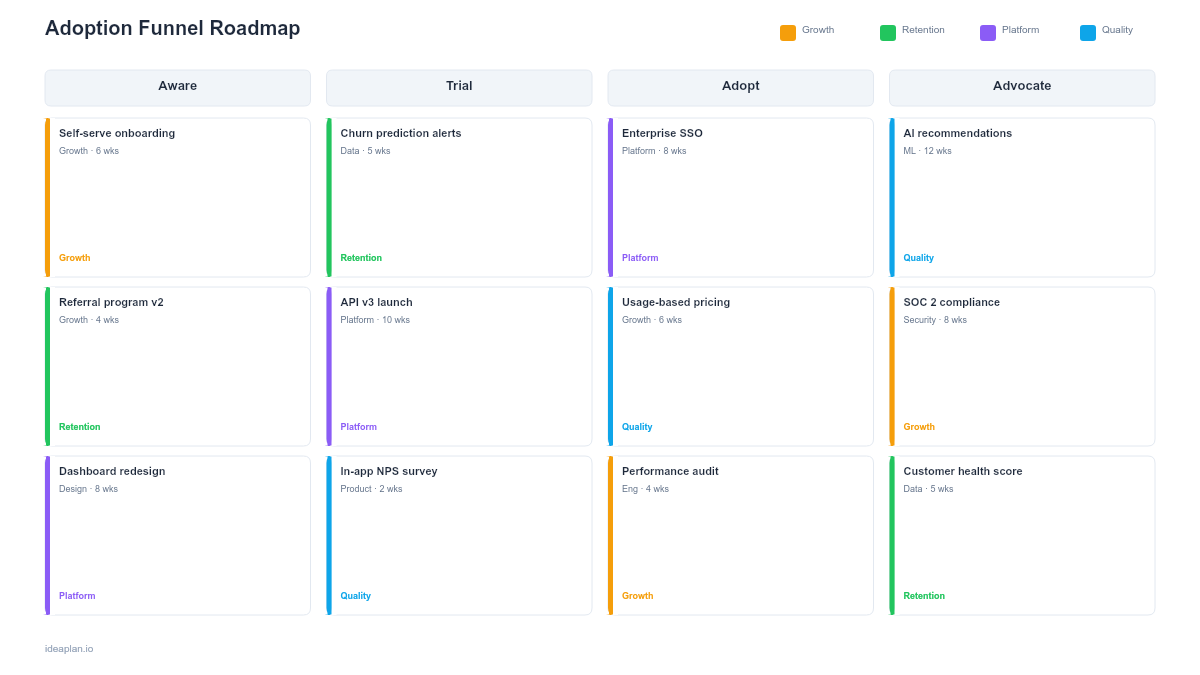
The adoption funnel roadmap plans improvements at each stage of the user adoption funnel: awareness, signup, activation, engagement, retention, and expansion. Each stage has its current conversion rate, target rate, and the experiments designed to close the gap. The funnel view shows where the biggest drop-offs are, which is where the biggest opportunities lie. Use the LTV/CAC calculator to model the revenue impact of funnel improvements.
Engagement Loop Roadmap
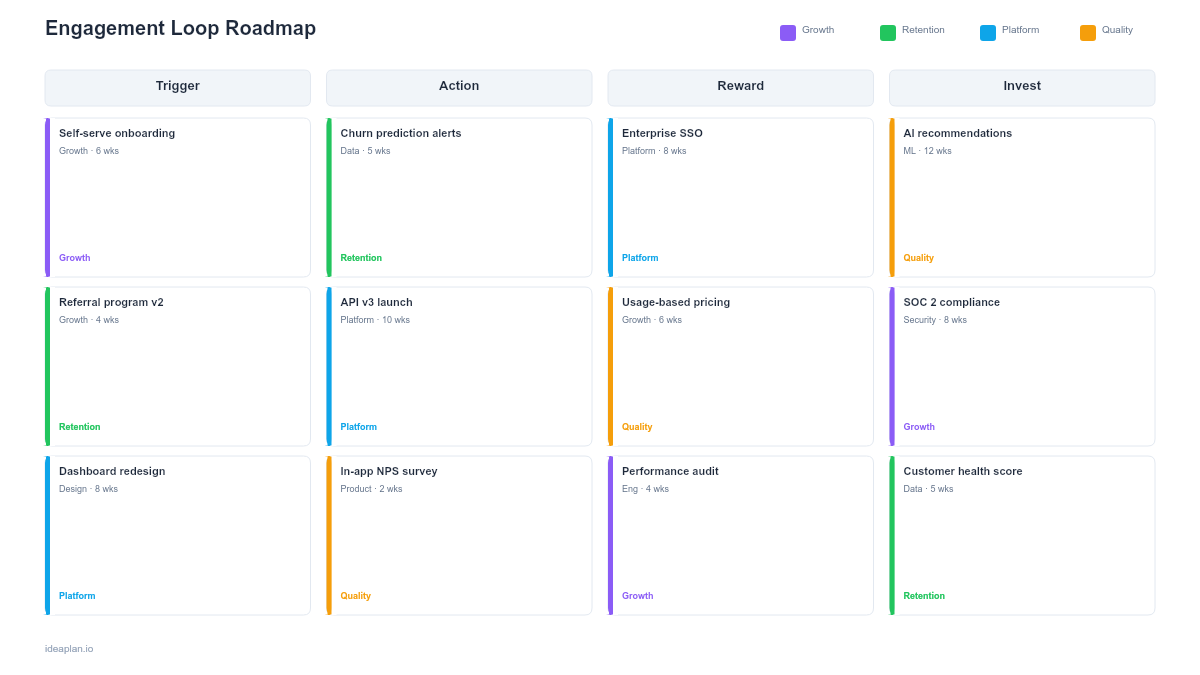
Engagement loops are the habit-forming cycles that keep users returning: trigger, action, reward, investment. This roadmap plans the design and optimization of these loops in your product. It covers notification strategy, content refresh cadence, gamification elements, and the metrics that indicate whether users are forming habits or just visiting once. For SaaS products competing on daily active usage, engagement loops are the difference between a tool people check once a month and one they cannot live without.
Growth Channels
These templates plan growth through specific channels: marketplaces, mobile, and referrals.
Marketplace Roadmap
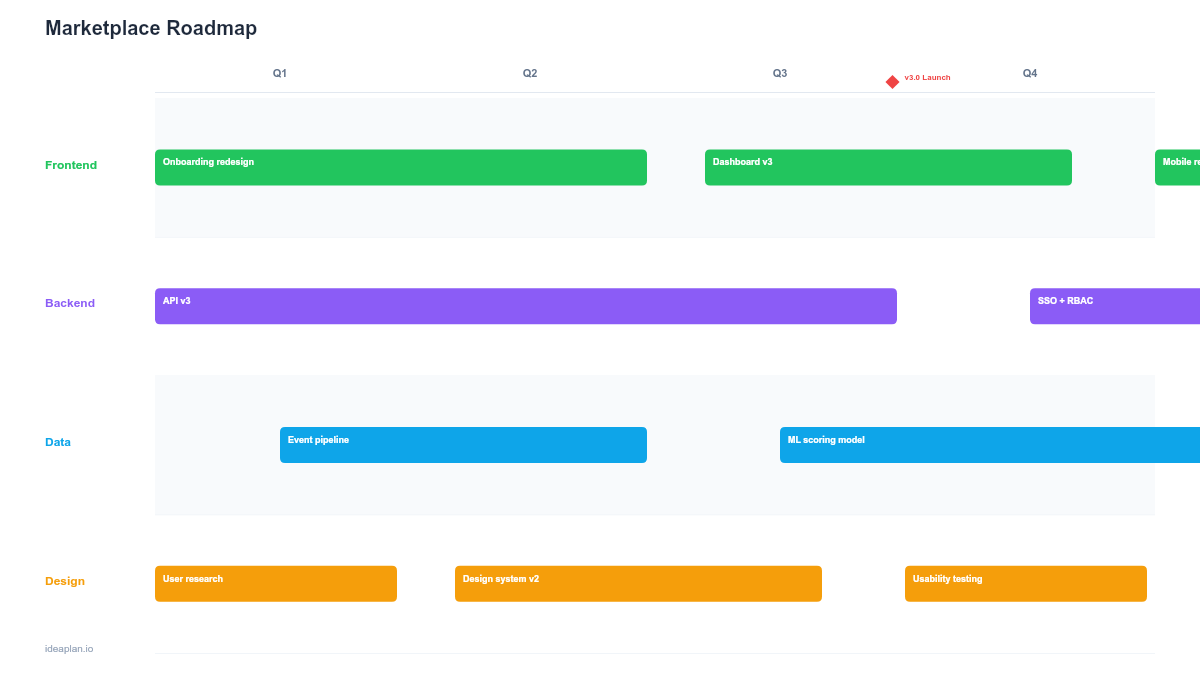
The marketplace roadmap plans the development of a two-sided marketplace: seller onboarding, buyer experience, discovery and search, trust and safety, and transaction management. For SaaS products adding a marketplace component (integrations marketplace, template marketplace, or full two-sided marketplace), this template coordinates the complex work of building for two distinct user groups simultaneously.
Mobile App Roadmap
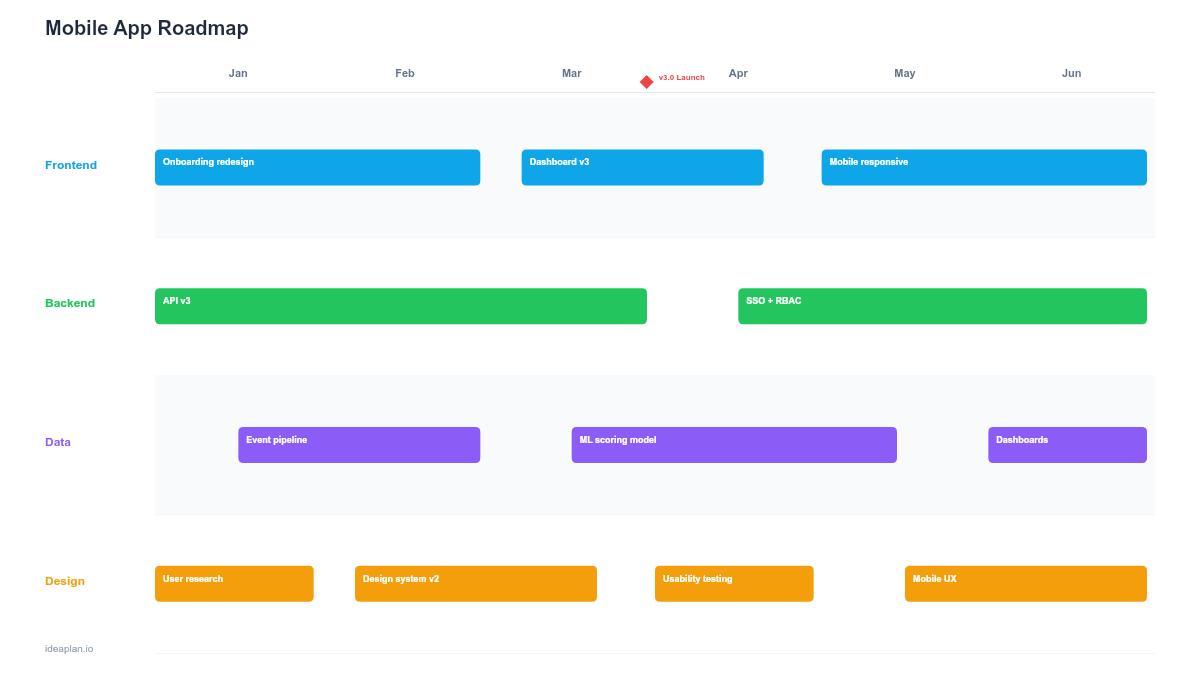
The mobile app roadmap plans the mobile companion to a web-based SaaS product. It covers feature parity decisions (what to include and exclude on mobile), platform-specific requirements (iOS and Android differences), app store optimization, push notification strategy, and offline capabilities. For SaaS products where mobile usage is growing, this template ensures the mobile experience is planned deliberately rather than treated as a stripped-down version of the web app.
Referral Program Roadmap
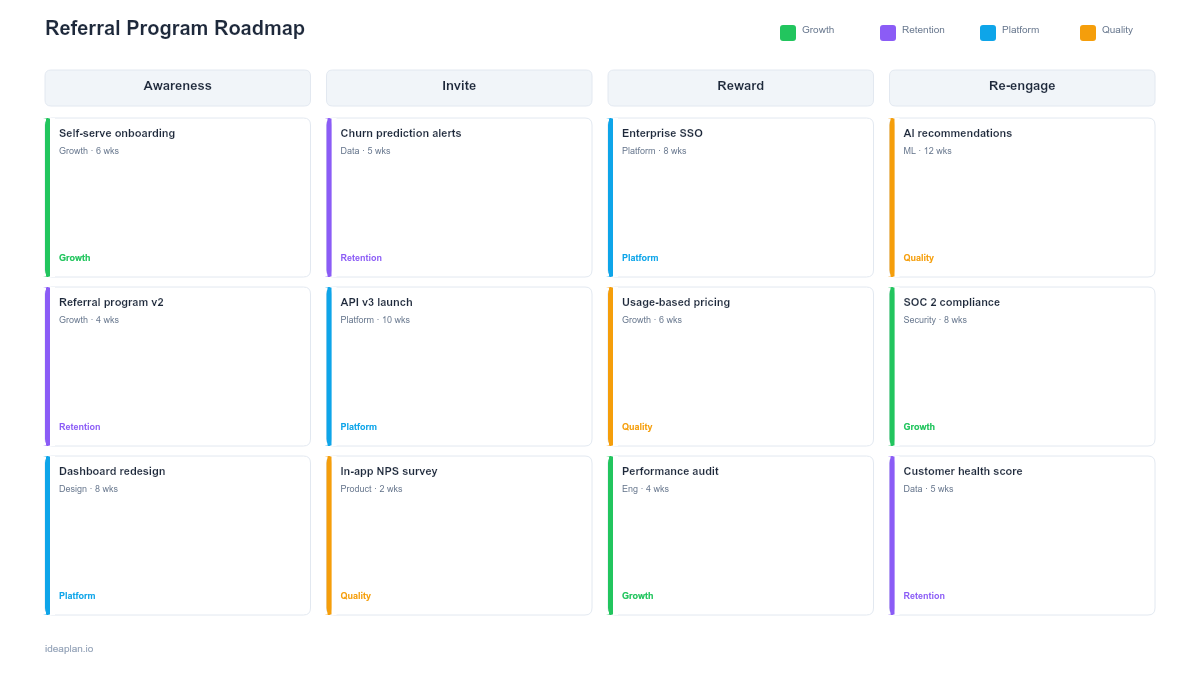
The referral program roadmap plans the development and optimization of a user referral program. It covers referral mechanics (invite flow, incentive structure, tracking), virality metrics (invite rate, conversion rate, viral coefficient), and the A/B testing plan for improving referral performance. For SaaS products where word-of-mouth is a primary growth channel, a structured referral program turns organic sharing into a measurable, improvable growth engine.
Enterprise & Infrastructure
These templates plan the enterprise readiness and infrastructure work that SaaS products need as they scale upmarket or grow their feature set.
Enterprise Readiness Roadmap
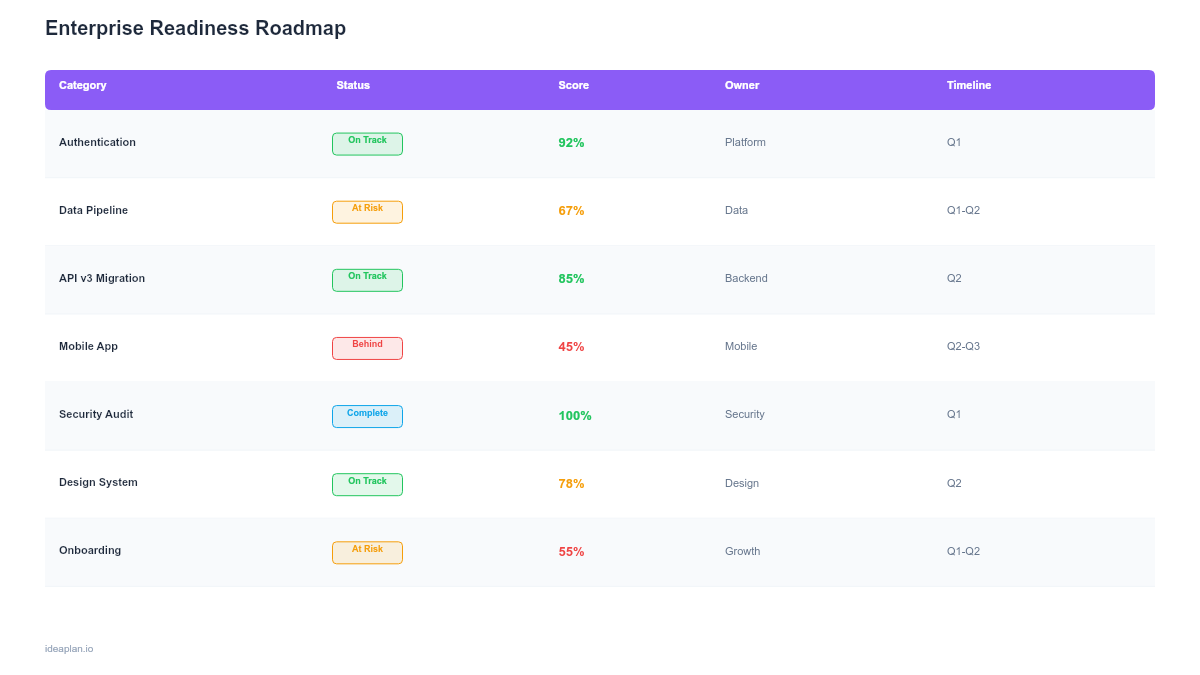
The enterprise readiness roadmap plans SSO, RBAC, audit logging, and other enterprise features that enterprise buyers require. Each capability is mapped to buyer readiness checkpoints: "ready for mid-market", "ready for enterprise", "ready for Fortune 500". For SaaS products selling into larger organizations, this roadmap turns "we need enterprise features" into a structured plan with clear milestones and security/compliance requirements.
Payment Infrastructure Roadmap
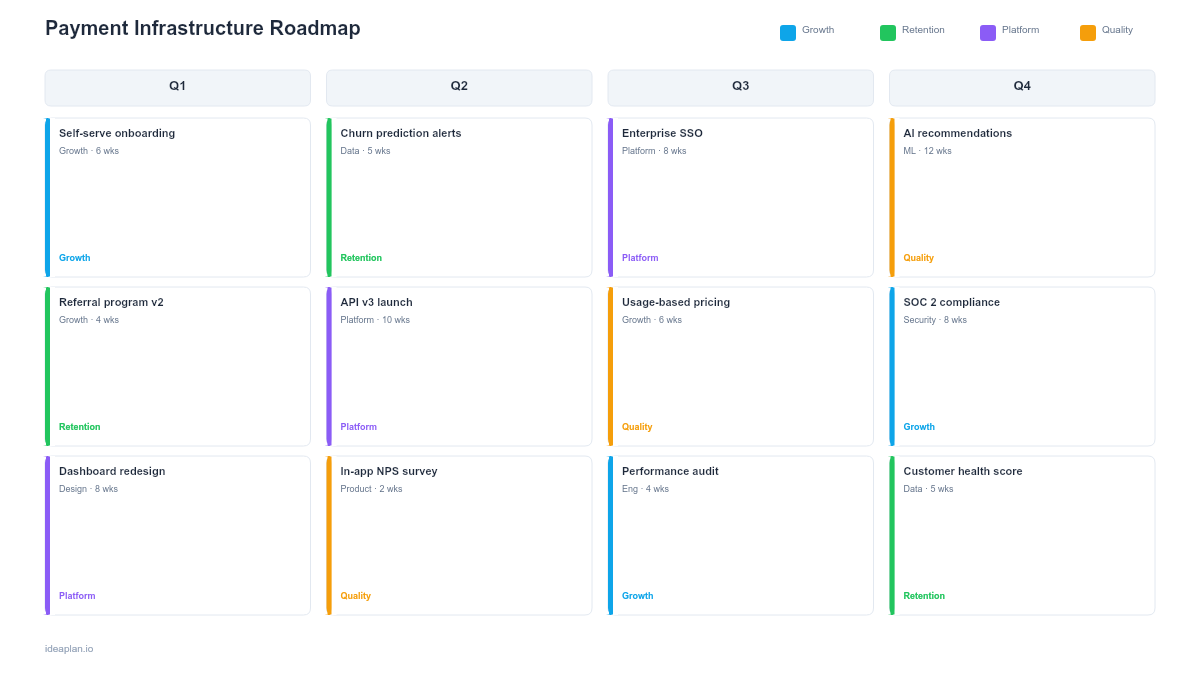
The payment infrastructure roadmap plans billing system improvements: new payment methods, tax compliance, dunning workflows, subscription lifecycle management, and revenue recognition. For SaaS products where the billing system is a competitive differentiator (usage-based pricing, complex plans, international expansion), this template ensures payment infrastructure keeps pace with business model evolution.
Notification System Roadmap
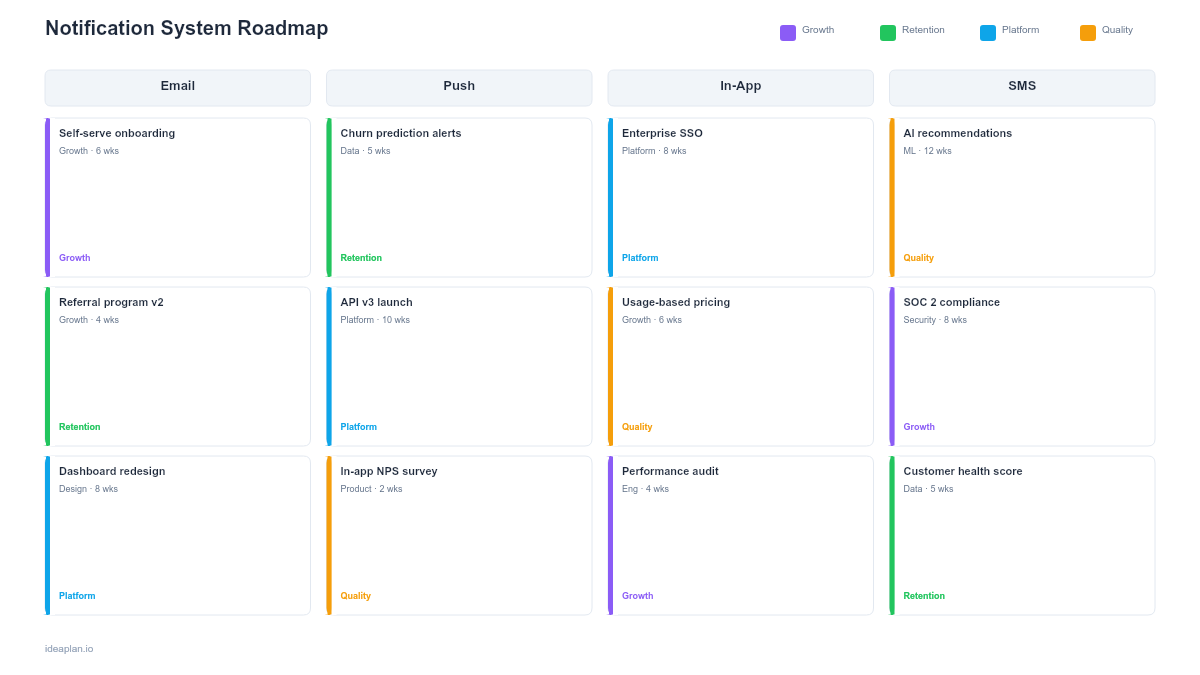
The notification system roadmap plans the development and optimization of in-app, email, and push notifications. It covers notification types (product updates, usage alerts, social triggers), delivery channels, frequency capping, and user preferences. For SaaS products where notifications drive re-engagement, this template ensures the notification strategy is coordinated across channels rather than haphazardly added feature by feature.
Search Experience Roadmap
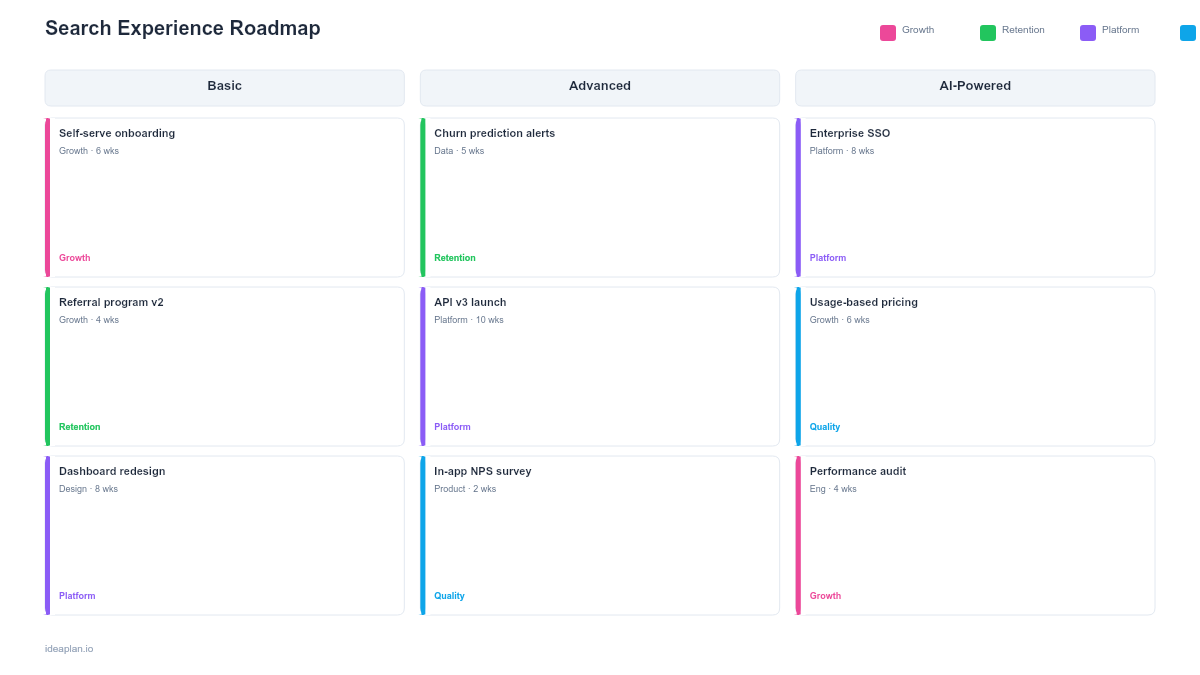
The search experience roadmap plans improvements to in-product search: indexing, relevance algorithms, filters and facets, saved searches, and search analytics. For SaaS products with large content libraries or data volumes, search quality is a core product experience. This template plans the evolution from basic keyword matching to AI-powered semantic search with personalized results.
Customer Education Roadmap
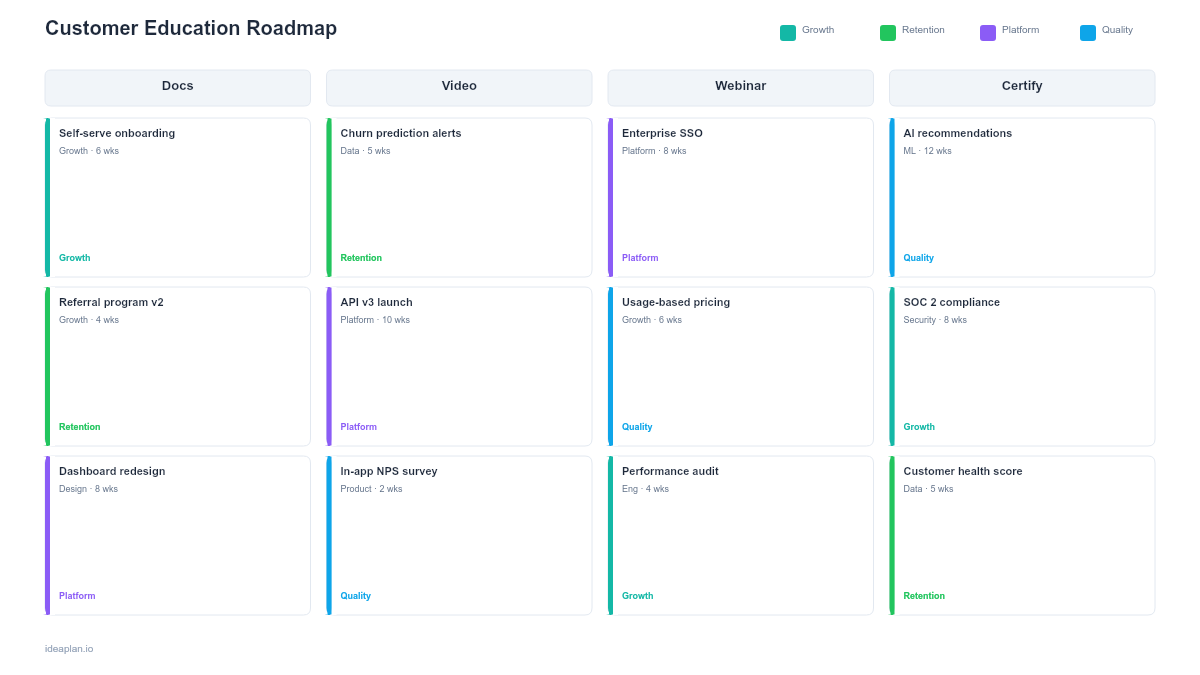
The customer education roadmap plans the development of in-product help, academy content, certification programs, and community resources. For SaaS products with complex workflows or steep learning curves, customer education is the difference between activation and churn. This template coordinates content creation, delivery mechanisms, and measurement across the customer lifecycle.
UX Debt Roadmap
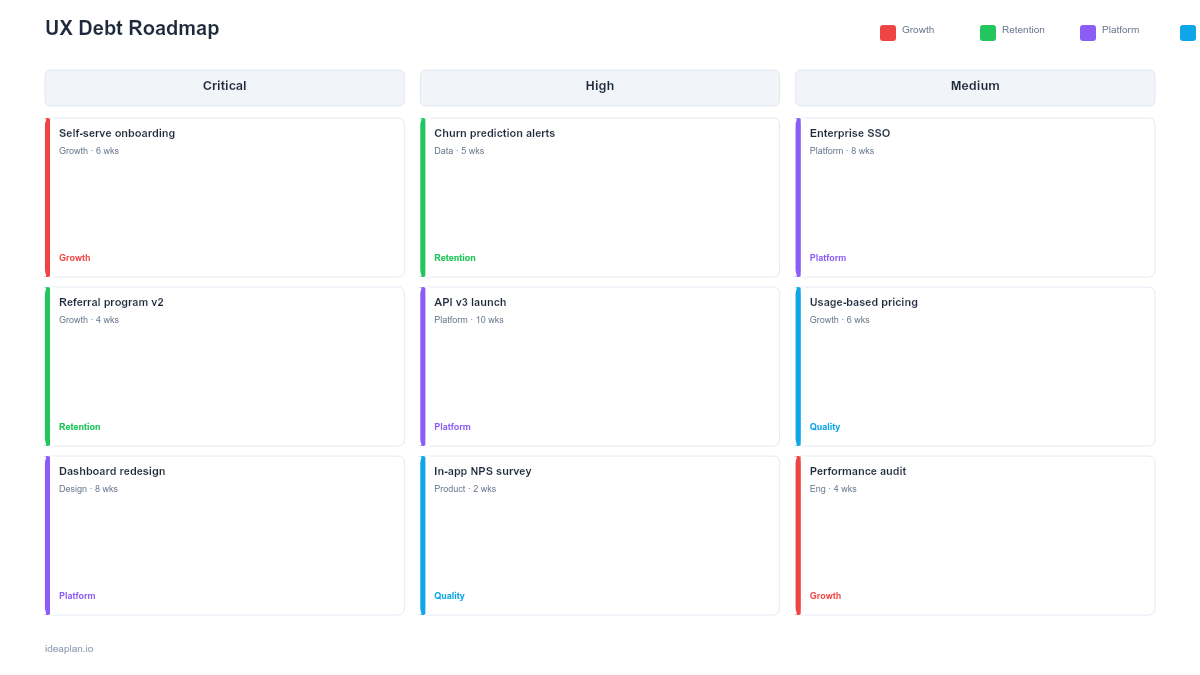
The UX debt roadmap systematically addresses accumulated user experience issues: inconsistent UI patterns, accessibility gaps, confusing workflows, and polish work that was skipped in MVP launches. It prioritizes UX debt by user impact and usage frequency, ensuring the team fixes the problems that affect the most users first. This template prevents UX debt from becoming invisible technical debt that degrades product quality over time.
E-Commerce Roadmap
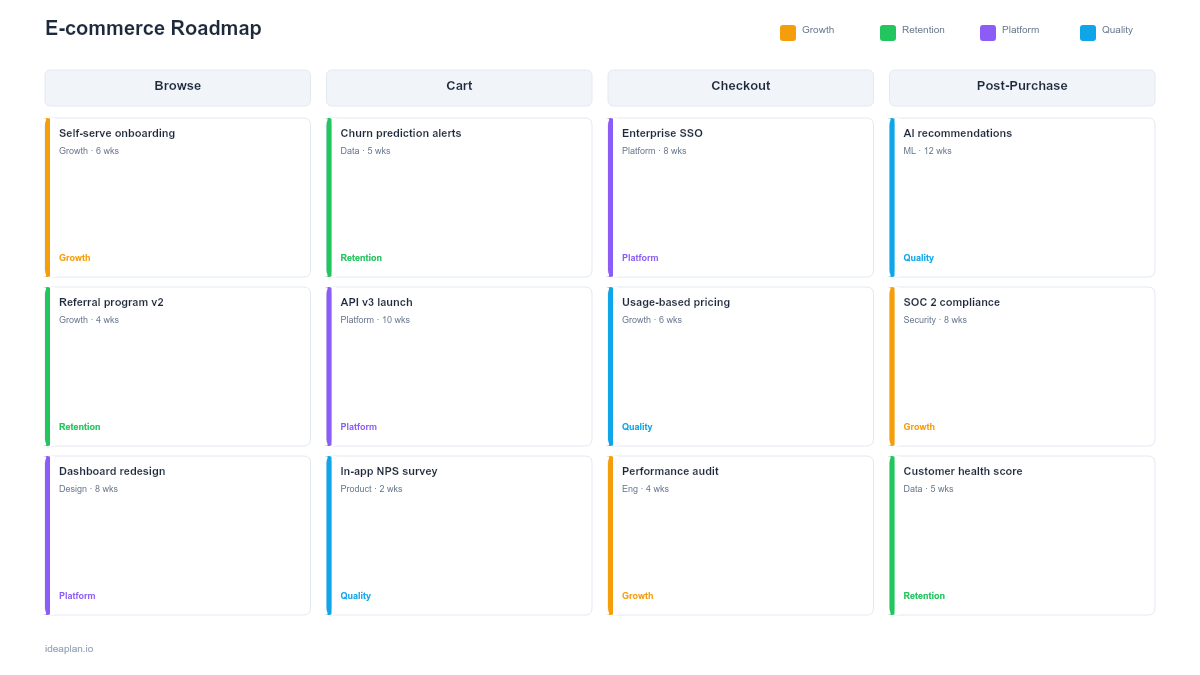
The e-commerce roadmap plans cart, checkout, payment, and fulfillment features for SaaS products adding transactional commerce. It covers catalog management, pricing rules, discount engines, cart abandonment flows, and order management. For SaaS products moving beyond subscriptions into one-time purchases or marketplace transactions, this template ensures the commerce experience is planned end-to-end.
How to Choose the Right Template
Match the template to your current SaaS growth challenge:
- Building the product → SaaS Product Roadmap or Product Feature Roadmap (Sheets for working, Slides for presenting)
- Deciding what to build → Feature Prioritization Matrix Roadmap
- Growing self-serve → Self-Serve Roadmap + Adoption Funnel Roadmap
- Increasing engagement → Engagement Loop Roadmap
- Expanding channels → Marketplace, Mobile App, or Referral Program Roadmap
- Scaling infrastructure → Enterprise Readiness, Payment Infrastructure, Notification System, or Search Experience Roadmap
- Improving adoption → Customer Education Roadmap
- Adding commerce → E-Commerce Roadmap
For early-stage SaaS, start with the SaaS Product Roadmap and the Self-Serve Roadmap. For growth-stage SaaS, add the Adoption Funnel and Engagement Loop roadmaps. For mature SaaS expanding into new channels, use the Marketplace, Mobile, or Referral templates. For enterprise expansion, prioritize the Enterprise Readiness and Payment Infrastructure roadmaps.
Explore More
- Top 8 Product-Led Growth Frameworks (2026) - 8 product-led growth frameworks for PMs building self-serve growth engines.
- Top 10 Retention Metrics for SaaS Products (2026) - 10 retention metrics that reveal whether your SaaS product keeps users coming back.
- Top 12 SaaS Metrics Every PM Should Track (2026) - The 12 most important SaaS metrics for product managers.