Quick Answer (TL;DR)
This free PowerPoint template organizes mobile app development across three tracks: iOS, Android, and Shared (backend/API/design). Each track shows feature milestones, release versions, and platform-specific requirements on a unified timeline. Download the .pptx, map your mobile feature pipeline, and use it to coordinate development across platforms while managing app store release cycles.
What This Template Includes
- Cover slide. App name, supported platforms, current version numbers, and planning period.
- Instructions slide. How to handle platform parity decisions, map shared vs. platform-specific work, and align with app store review timelines. Remove before presenting.
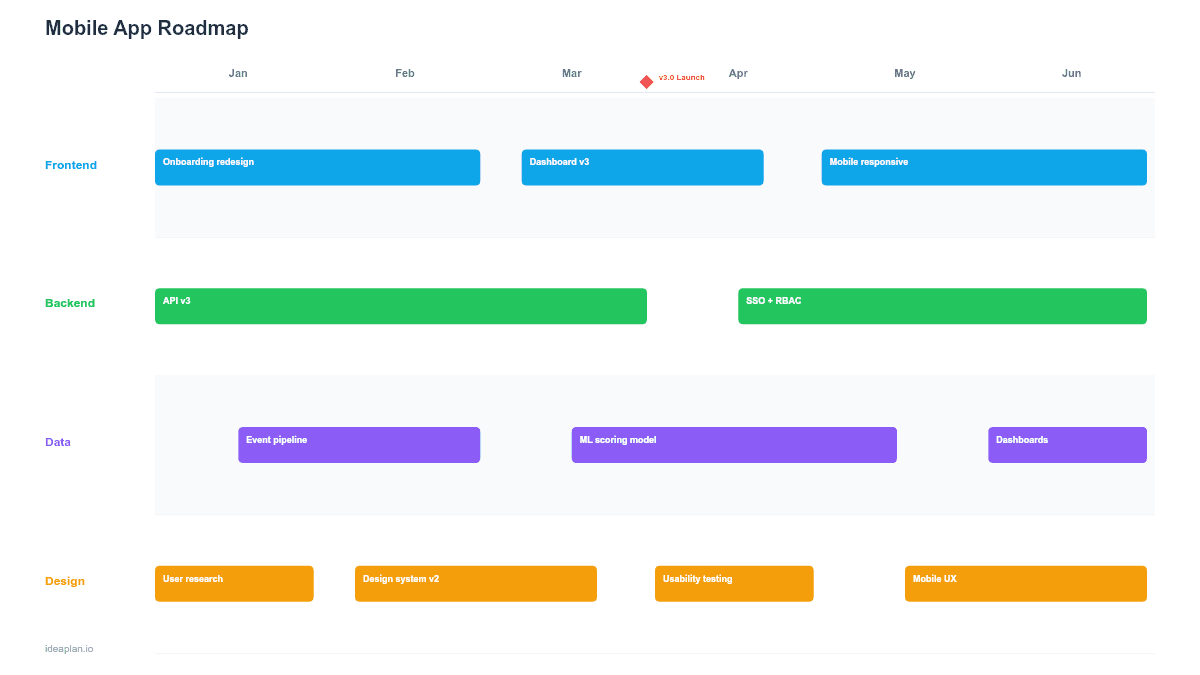
- Blank template slide. Three development tracks (iOS, Android, Shared) across a monthly timeline with version milestones, feature cards, and platform parity indicators.
- Filled example slide. A consumer app roadmap showing 8 feature releases over 6 months with platform stagger, two OS version support updates, and a shared API migration.
Why Mobile Apps Need Their Own Roadmap Format
Mobile development operates under constraints that web products do not face. App store review cycles add 1-7 days of latency to every release. OS version updates (iOS 19, Android 16) can break existing functionality and require adaptation work that competes with feature development. And the fundamental question of platform parity. Should iOS and Android ship the same features at the same time?. Needs an explicit planning artifact.
A standard feature roadmap does not capture these mobile-specific dynamics. It treats "Build push notifications" as a single initiative when the reality is three separate workstreams: iOS implementation using APNs, Android implementation using FCM, and backend notification service development. The mobile roadmap makes this platform multiplier visible, preventing the chronic underestimation that plagues mobile teams.
Template Structure
Development Tracks
Three horizontal rows separate work by execution stream:
- iOS Track. Platform-specific features, UIKit/SwiftUI work, Apple API integrations (HealthKit, StoreKit, Push), iOS version support updates, and App Store submission milestones.
- Android Track. Platform-specific features, Jetpack Compose/View work, Google API integrations (Play Billing, Firebase, Material), Android version support, and Play Store submission milestones.
- Shared Track. Backend APIs, shared business logic (if using cross-platform tooling), design system updates, analytics instrumentation, and infrastructure changes that both platforms consume.
Version Milestones
Vertical markers on the timeline indicate planned app releases (v2.4, v2.5, v3.0). Each version groups the features shipping in that release. The gap between the code-complete date and the release milestone accounts for QA, app store review, and staged rollout. A buffer that web roadmaps do not need but mobile roadmaps must include.
Parity Indicators
Color-coded badges show platform parity status for each feature:
- Simultaneous. Both platforms ship in the same release window (within 1 week).
- Staggered. One platform ships first (typically 2-4 weeks ahead). Common when one platform team is larger.
- Exclusive. Platform-specific feature with no counterpart (e.g., Apple Watch complication, Android widget).
These indicators prevent the recurring leadership question: "Why does Android not have the feature iOS shipped last month?"
OS Compatibility Rows
A thin row at the bottom of each platform track shows which OS versions are supported and when older versions are dropped. Dropping iOS 16 support in Q3 frees engineering from maintaining backward compatibility workarounds, but needs to be communicated to users in advance.
How to Use This Template
1. Inventory your platform split
Document current user distribution: what percentage is iOS vs. Android, which OS versions they run, and which platform has higher engagement and revenue. These numbers inform parity decisions. If 80% of revenue comes from iOS, shipping iOS-first for certain features is a defensible strategy, not a quality problem.
2. Classify features by platform scope
For each planned feature, determine: Is it iOS-only, Android-only, or cross-platform? If cross-platform, does it share backend work? Classify every initiative before placing it on the timeline. This step reveals the true scope. A feature that touches all three tracks requires three times the coordination.
3. Plan release windows
Map your release cadence. Most mobile teams ship every 2-4 weeks. Place version milestones on the timeline, then assign features to versions. Build in a 5-day buffer for app store review. For major releases (version bumps), add a week for staged rollout where you release to 5%, then 25%, then 100% of users while monitoring error rates and crash reports.
4. Sequence platform-specific work
Decide your stagger strategy. Options include: always ship iOS first (smaller surface area, faster review), always ship simultaneously (parity matters for your market), or decide per feature based on platform risk. Document the strategy so the team does not re-debate it every sprint.
5. Account for OS update season
Apple and Google release major OS versions annually (September and October respectively). Block 2-3 weeks in Q3 each year for compatibility testing and updates. This is non-negotiable work that displaces feature development. The roadmap should show it explicitly rather than treating it as a surprise.
6. Review with cross-platform stakeholders
Present the roadmap to product, engineering leads from both platforms, design, QA, and backend teams. The three-track view surfaces coordination points: "Backend API v3 must ship in June for the iOS biometrics feature to work in the July release." These dependencies are invisible in a single-track roadmap.
When to Use This Template
A mobile app roadmap is the right format when:
- You ship on both iOS and Android and need to manage feature parity, staggered releases, and platform-specific work
- Release cycles involve app store reviews that add latency and uncertainty to shipping timelines
- Backend API development must be coordinated with mobile release schedules to avoid blocking features
- OS version updates consume meaningful engineering time that needs to be planned alongside feature work
- Stakeholders ask about platform parity and need a single view showing what each platform is getting and when
If your app targets a single platform, a standard release plan roadmap PowerPoint template provides a simpler format. For feature-level prioritization decisions before they reach the mobile roadmap, the feature prioritization matrix PowerPoint template helps score and rank candidates.
Featured in
This template is featured in SaaS Product Roadmap Templates, a curated collection of roadmap templates for this use case.
Key Takeaways
- Mobile roadmaps need three tracks (iOS, Android, Shared) to capture the platform multiplier that standard feature roadmaps miss.
- Version milestones with app store review buffers reflect the real shipping timeline for mobile products.
- Parity indicators prevent recurring stakeholder confusion about why one platform has features the other lacks.
- OS update season (Q3 annually) requires explicit capacity allocation that displaces feature work.
- PowerPoint format supports cross-platform planning meetings where iOS, Android, backend, and product teams align on sequencing.
- Compatible with Google Slides, Keynote, and LibreOffice Impress. Upload the
.pptxto Google Drive to edit collaboratively in your browser.