These nine free GTM and product launch roadmap templates cover launch planning, marketing campaigns, beta rollouts, sales enablement, and competitive positioning. All are free PowerPoint downloads that work in Google Slides, Keynote, and LibreOffice Impress.
A product launch fails more often from poor cross-functional coordination than from a bad product. Engineering ships on time, but marketing does not have the messaging ready. Sales has not been trained on the new features. Support does not know the FAQ. The product is live, and nobody outside engineering is prepared. Each template coordinates the work across functions so nothing falls through the cracks. The Product Launch Playbook covers the full launch strategy and our guide on what a go-to-market strategy is explains the fundamentals; these templates are the execution artifacts.
What templates do you need for launch planning?
These templates structure the launch itself: the cross-functional coordination from "feature complete" to "customers can use it."
Go-to-Market Roadmap
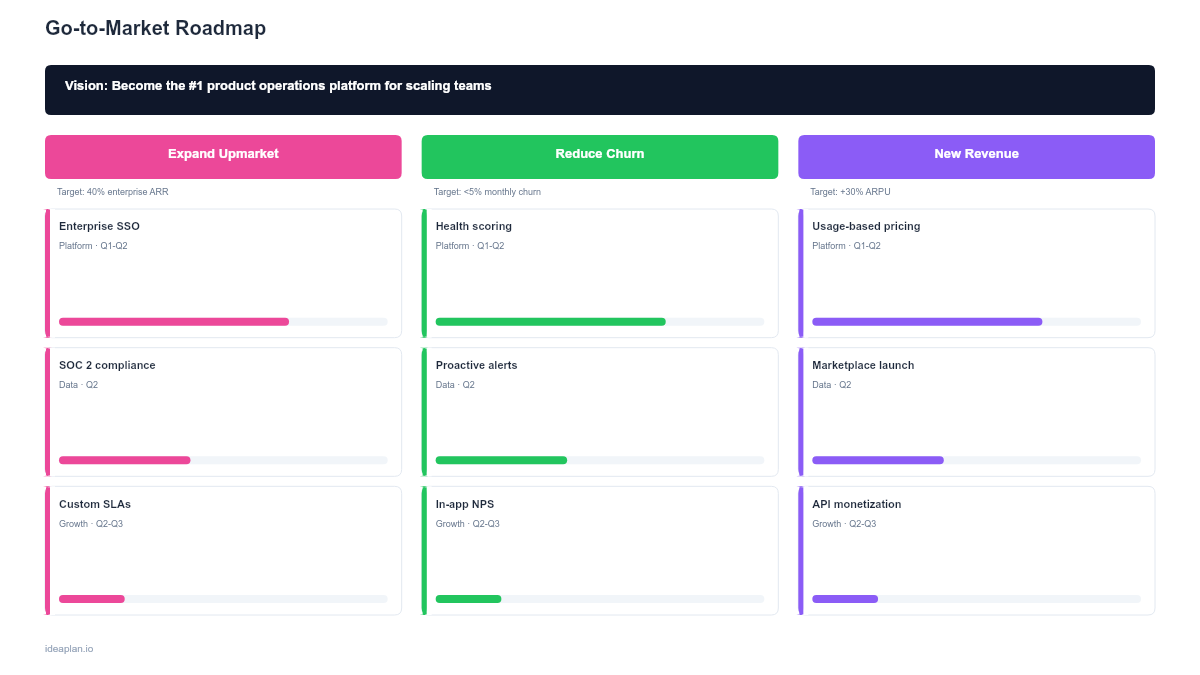
The GTM roadmap coordinates every function that touches a product launch: product, engineering, marketing, sales, support, and success. It organizes the launch into phases (pre-launch, launch, post-launch) with function-specific milestones in each phase. The template makes ownership explicit: each milestone has a function lead and a target date. Use this for any launch that requires coordination across three or more teams.
Product Launch Roadmap
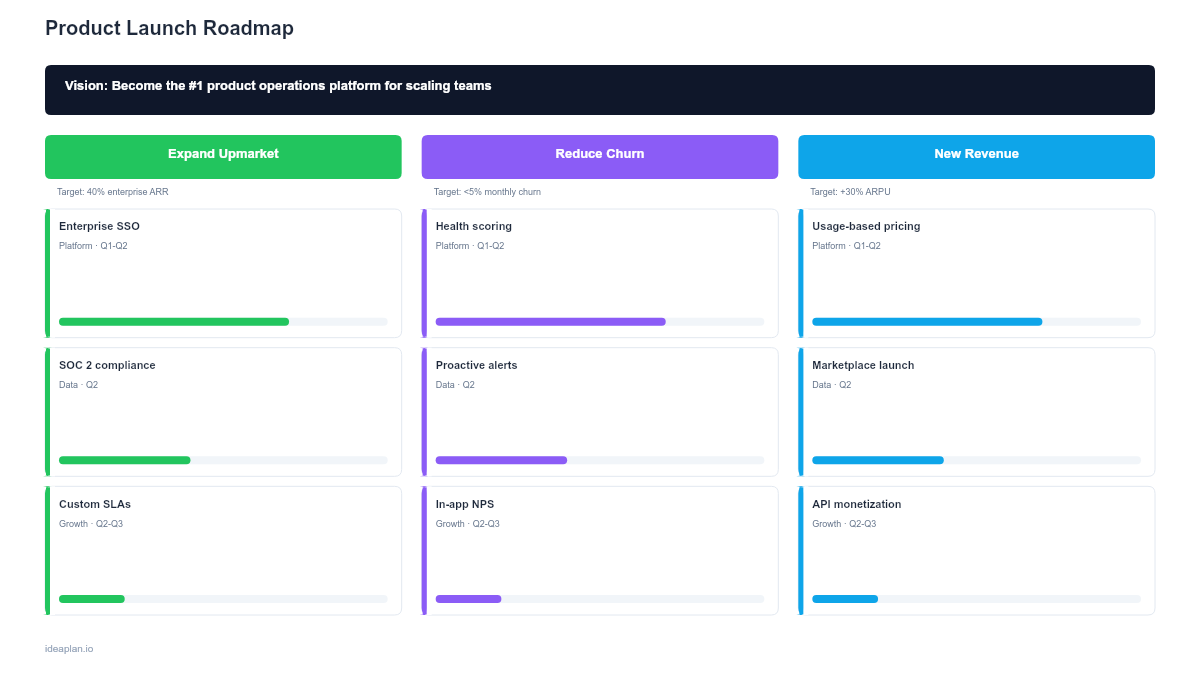
The product launch roadmap focuses on the product-specific launch activities: final QA, performance testing, documentation, onboarding flows, and the phased rollout plan. It is more tactical than the GTM roadmap and is typically owned by the product manager rather than the marketing team. Use this template alongside the GTM roadmap. The product launch roadmap feeds into the GTM timeline as the "product readiness" workstream.
Beta Launch Roadmap
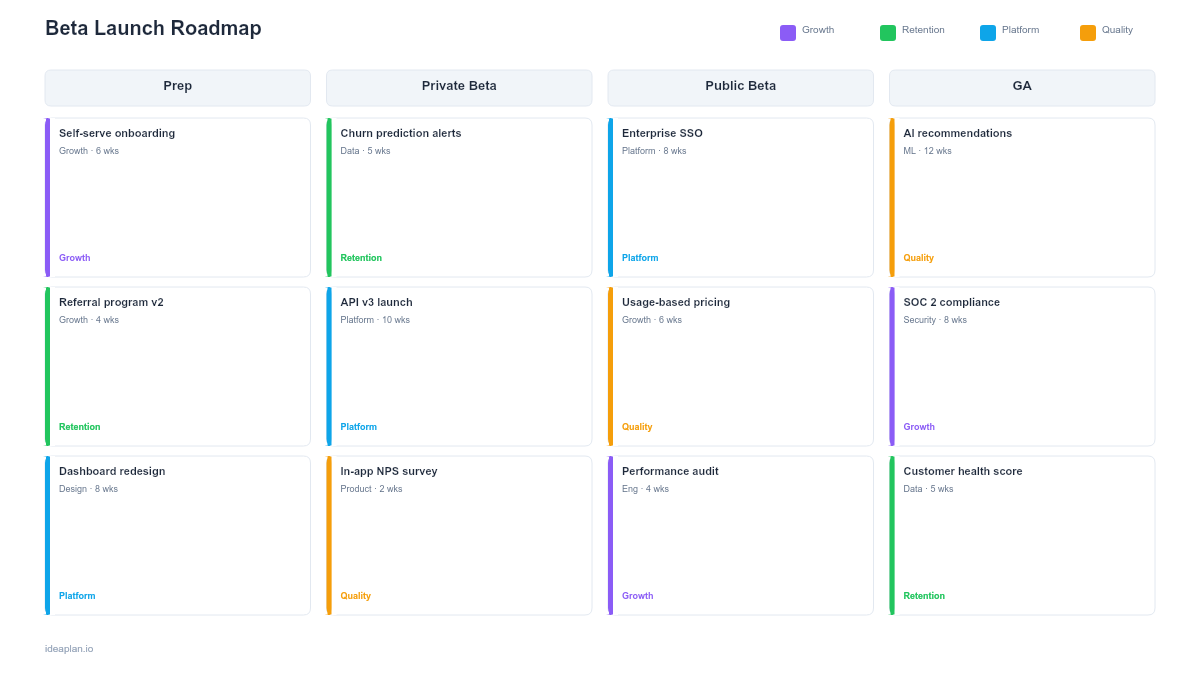
When the launch strategy includes a beta phase, this template plans the controlled release. It covers beta participant recruitment, onboarding, structured feedback collection, bug triage, and the graduation criteria for moving from beta to general availability. The beta roadmap is a pre-launch artifact that feeds into the full GTM roadmap. It is particularly useful for products where early user feedback will shape the GA feature set.
Early Access Roadmap
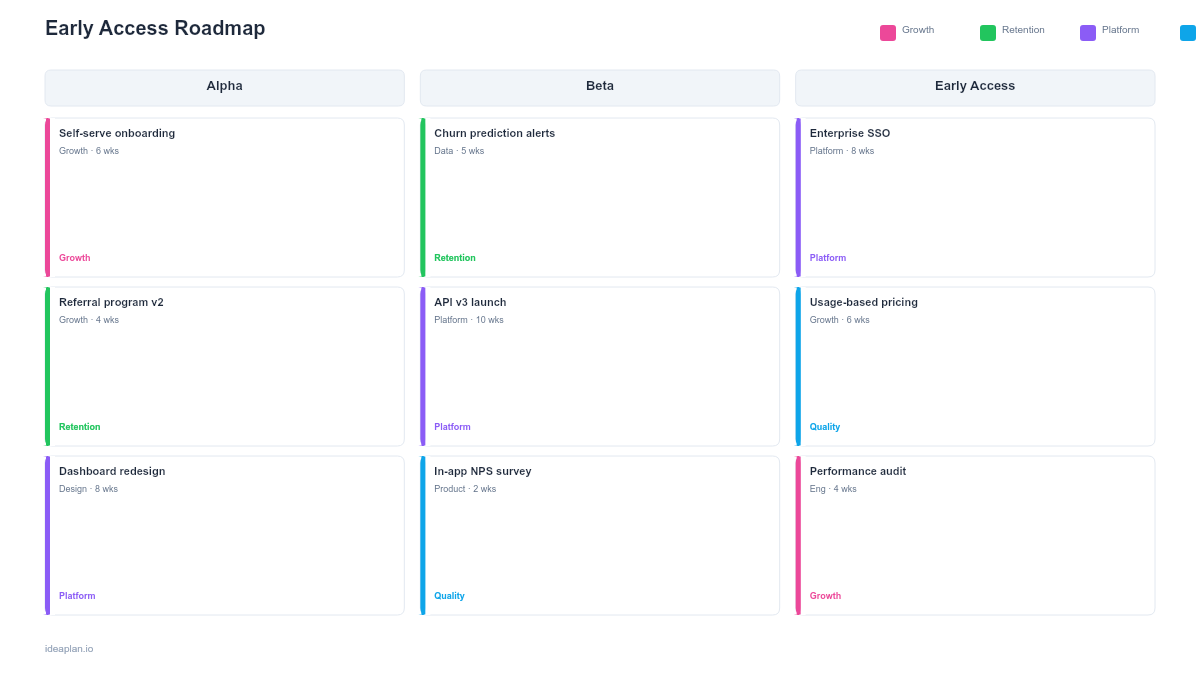
Early access programs serve a dual purpose: gather product feedback and generate early revenue or case studies. This template plans both tracks: the product track (feature rollout, feedback loops, iterations) and the business track (early access pricing, customer success, case study development). For B2B products, early access participants often become your first testimonials and references, so the template includes a customer marketing timeline alongside the product timeline. The B2B product management playbook covers the full GTM lifecycle for B2B teams, from stakeholder alignment through post-launch expansion.
Pilot Program Roadmap
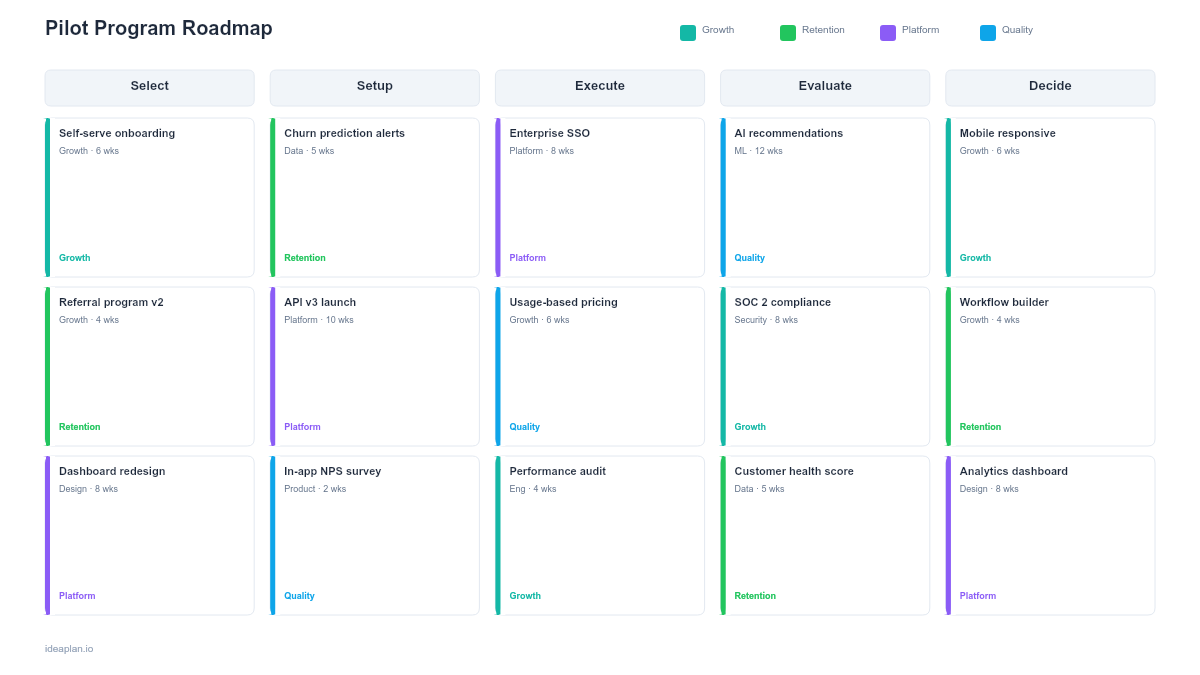
The pilot program roadmap manages structured product pilots with a small group of customers before committing to a full rollout. It divides the pilot into five phases: Select (participant criteria and recruitment), Setup (provisioning and onboarding), Execute (usage tracking and mid-pilot review), Evaluate (scoring against predefined success criteria), and Decide (Go/No-Go recommendation with rollout plan). Use this template when you need real-world validation with actual customers, especially for enterprise features where internal testing cannot replicate production conditions.
What templates cover marketing and competitive positioning?
These templates plan the marketing and competitive dimensions of a launch: how you position the product, reach your audience, and respond to competitive moves.
Marketing Campaign Roadmap
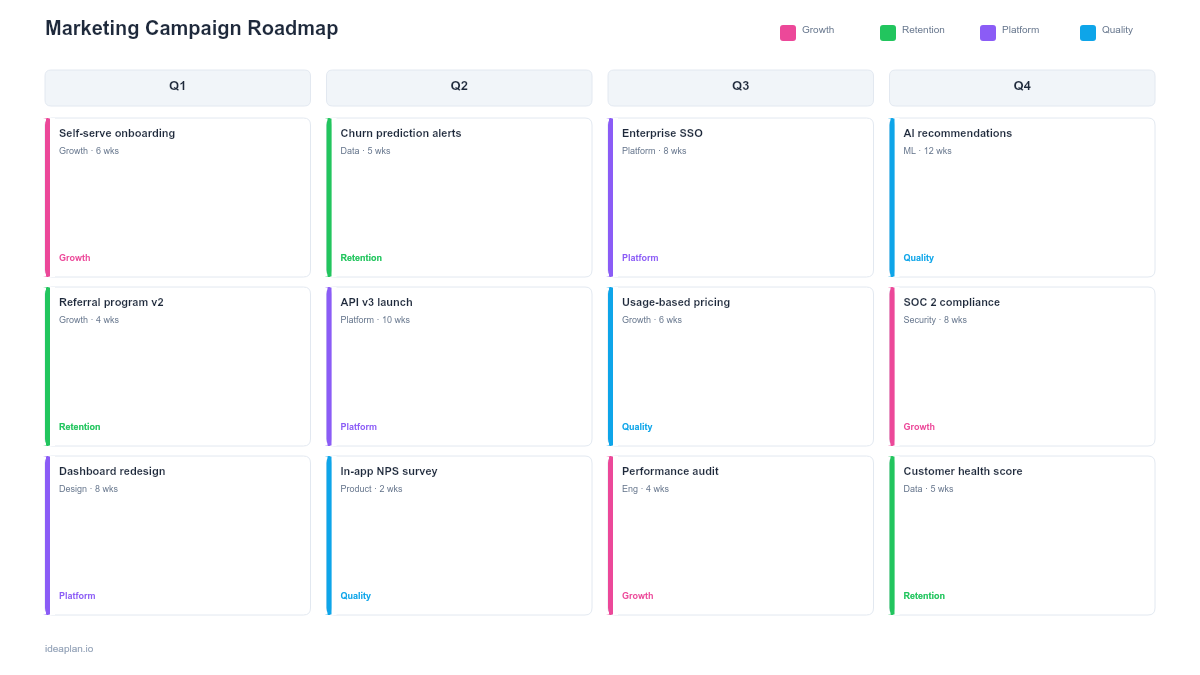
The marketing campaign roadmap plans the full marketing effort around a product launch: messaging development, content creation, channel strategy, paid campaigns, PR outreach, and event presence. Each campaign element has a timeline, owner, and success metric. For product managers who work closely with marketing, this template ensures the product story is consistent across every channel and that campaign timing aligns with product readiness.
Public Preview Roadmap
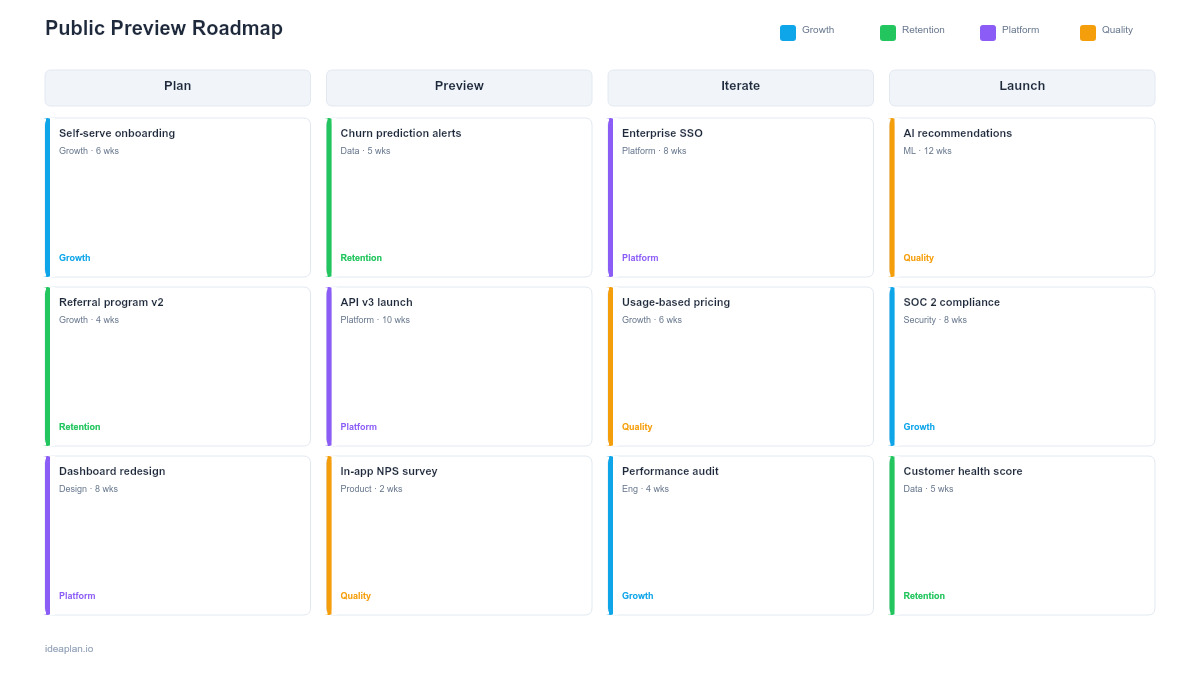
A public preview sits between beta and GA. The product is available to anyone, but with the expectation that it may change based on feedback. This template plans the public preview phase: feature scope, known limitations, feedback collection mechanisms, and the criteria for promoting from preview to GA. Cloud platforms and developer tools use public previews extensively. The template includes SLA expectations for preview features (typically lower than GA) and migration planning for breaking changes.
Competitive Response Roadmap
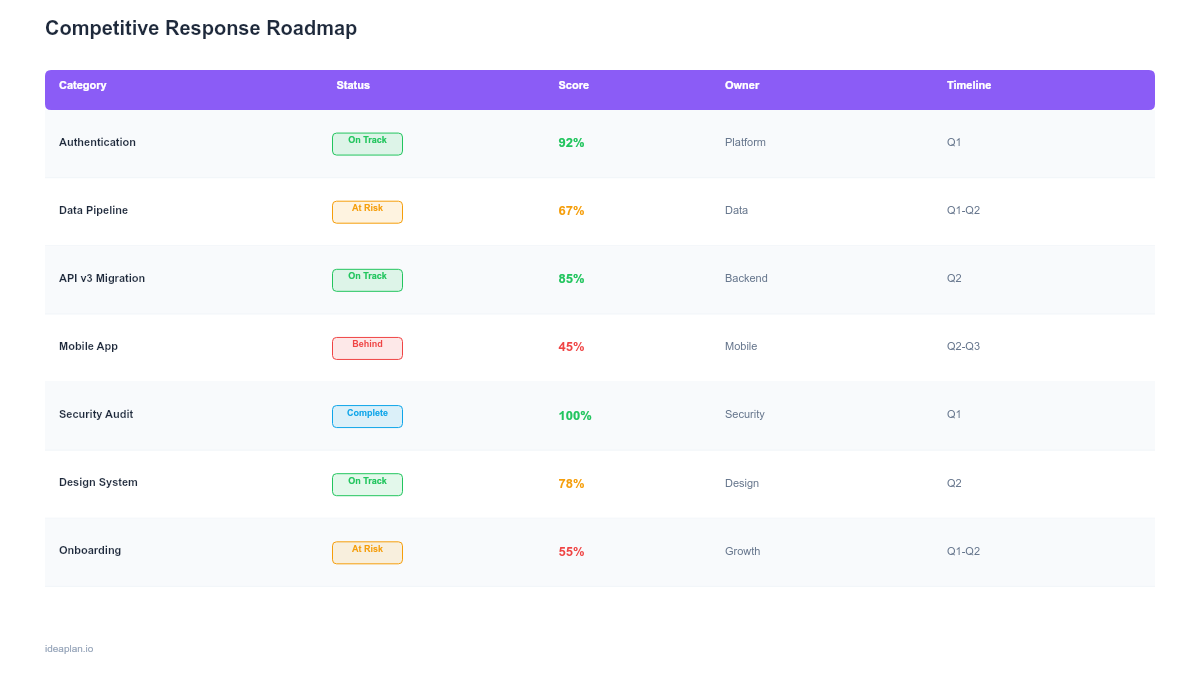
When a competitor launches something that threatens your position, you need a structured response, not a panic-driven reaction. The competitive response roadmap plans both the short-term response (messaging updates, sales battle cards, feature comparison pages) and the medium-term product response (which competitive gaps to close and which to concede). It forces you to distinguish between competitive gaps that matter to your customers and gaps that only matter to analysts.
Sales Enablement Roadmap
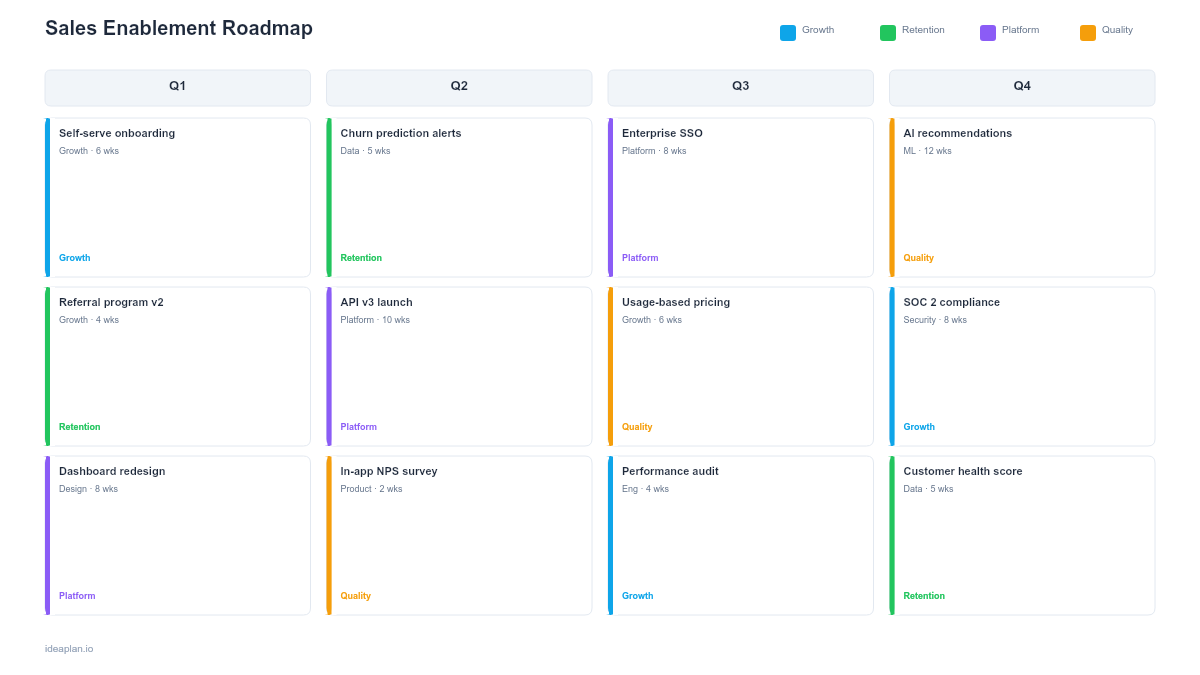
The sales enablement roadmap plans everything the sales team needs to sell the new product or feature: training sessions, demo scripts, battle cards, objection handling guides, pricing documentation, and case studies. It coordinates the timing so sales is trained before they encounter the first prospect asking about the new feature. For product-led companies transitioning to sales-assisted, this template bridges the gap between product launches and sales readiness.
How do you choose the right GTM template?
Match the template to your launch complexity:
- Simple feature launch (one team, existing customers) → Product Launch Roadmap alone
- Multi-team launch (marketing, sales, support involved) → GTM Roadmap as the master plan, Product Launch Roadmap for the product workstream
- Phased rollout → Beta Launch Roadmap or Early Access Roadmap for the first phase, then GTM Roadmap for general availability
- Enterprise validation → Pilot Program Roadmap to validate with a small group of accounts before scaling to GA
- Competitive launch (responding to a competitor) → Competitive Response Roadmap for positioning, Marketing Campaign Roadmap for execution
For major launches, use three templates together: the GTM Roadmap as the coordination layer, the Product Launch Roadmap for engineering readiness, and the Marketing Campaign Roadmap for demand generation. Each template feeds into the others. Use the TAM calculator to size the market opportunity before committing to a full launch plan.
Explore More
- Top 10 AI Tools for Product Managers (2026) - 10 AI-powered tools that save product managers hours every week.
- Top 10 Customer Feedback Tools and Methods (2026) - 10 tools and methods for collecting, organizing, and acting on customer feedback.
- Top 15 Free Product Management Templates (2026) - 15 free PM templates covering roadmaps, PRDs, strategy docs, sprint plans, and retrospectives.
- Top 15 Product Management Books for 2026 - 15 essential PM books ranked by practical value.
Related reading: Free Product Roadmap Templates 2026: 22 Picks (All Formats).