


Product management in 2025 is all about balancing customer needs, agile methodologies, and leveraging AI for better decision-making. Here’s what you need to know:
- Focus on Outcomes: Shift to flexible, outcome-based roadmaps that prioritize business results over feature lists.
- Customer-Centric Development: Use user research, frameworks like RICE, and continuous feedback to align with market needs.
- AI and Tools: AI tools like Mixpanel and analytics platforms like Amplitude improve decision-making and efficiency.
- Stakeholder Alignment: Clear communication, OKRs, and regular updates boost collaboration and goal alignment.
- Flexible Roadmaps: Frameworks like Now-Next-Later help teams adapt while staying focused on priorities.
Quick Overview
| Focus Area | Key Actions | Benefits |
|---|---|---|
| Strategic Planning | Set clear OKRs and measurable metrics | Better goal execution |
| Customer Centricity | Use research and feedback loops | Stronger market alignment |
| Tech Integration | Leverage AI and analytics tools | Improved decision-making |
Start by defining clear goals, leveraging AI tools, and maintaining a customer-first approach to thrive in 2025.
The Product Manager's AI Playbook for 2025
Vision and Goals
Defining a clear product direction for 2025 means balancing a long-term vision with measurable results. Data shows that companies using structured goal-setting frameworks are 2.3x more likely to consistently meet their product objectives.
Set Product Goals and Metrics
Successful product management starts with clear, measurable goals. In 2025, combining Objectives and Key Results (OKRs) with specific metrics is a proven approach.
Here’s how product teams typically organize their goals:
| Goal Level | Focus Area | Example Metrics |
|---|---|---|
| Strategic | Business Impact | Revenue growth, Market share |
| Tactical | Product Performance | User engagement, Feature adoption |
| Operational | Team Efficiency | Sprint velocity, Time-to-market |
"OKRs bring the promise of greater focus, alignment, and measurable progress toward exciting outcomes." - Productboard
For instance, a product objective could involve launching a major initiative with measurable results, such as improved feature adoption, increased customer engagement, or higher revenue.
After setting goals, the next step is analyzing the market landscape to ensure your product strategy meets current demands.
Research Market Needs
Combining qualitative and quantitative research is key to making informed product decisions. This includes customer feedback, competitor analysis, and tracking industry trends to guide your strategy.
Key elements for shaping your product vision:
| Component | Purpose | Key Consideration |
|---|---|---|
| Vision Statement | Define long-term goals | Should inspire and guide action |
| Target Audience | Identify key users | Based on detailed analysis |
| Success Metrics | Track progress | Must be measurable |
Customer-First Development
With 70% of product failures linked to a poor understanding of market needs, focusing on customer-centric development is more crucial than ever in 2025.
Run User Research
User research is all about understanding your audience. Combining different methods like interviews, usability testing, and analytics helps you get a complete picture of what users want and need:
| Research Method | Purpose | Key Benefits |
|---|---|---|
| In-depth Interviews | Explore user pain points | Detailed qualitative data |
| Usability Testing | Test design effectiveness | Real-time feedback |
| Analytics Analysis | Monitor behavior trends | Data-backed decisions |
"The best product managers are the ones who can balance the needs of the business with the needs of the customer." - Marty Cagan, Partner at Silicon Valley Product Group
Choose Features with Frameworks
Once you’ve gathered insights from research, the next step is deciding which features to focus on. Tools like the RICE framework help teams prioritize by breaking decisions into clear components:
| Component | Description |
|---|---|
| Reach | Number of users affected |
| Impact | Effect on user experience |
| Confidence | Certainty of success |
| Effort | Resources needed to implement |
For example, Airbnb used this framework to revamp their booking process, leading to a noticeable boost in booking success rates.
Test Product Ideas
Testing product ideas involves three key stages:
- Concept Testing: Use simple prototypes and interviews to check if your core idea resonates with users.
- MVP Development: Build a basic version with essential features and track specific success metrics.
- Continuous Improvement: Use tools like Mixpanel and UserTesting to gather feedback and make quick adjustments.
This step-by-step process ties in with agile principles, making it easier to respond to user feedback and evolving market demands.
Roadmap and Delivery
After gathering customer insights and identifying key features, the focus shifts to delivering products efficiently. This involves creating clear roadmaps and using ongoing feedback to guide development. In today’s fast-moving product landscape, flexible roadmaps and constant feedback play a critical role in meeting user needs. Research shows that teams leveraging flexible roadmaps are 2.5 times more likely to deliver successful products.
Build Flexible Roadmaps
The Now-Next-Later framework is a practical way to balance clarity with adaptability. It organizes tasks based on urgency and strategic goals, ensuring teams stay focused while remaining open to change. Here's how it works:
| Timeline | Focus | Key Elements |
|---|---|---|
| Now (0-3 months) | Immediate priorities | Active development tasks |
| Next (3-6 months) | Medium-term goals | Planned features with room to adjust |
| Later (6+ months) | Strategic direction | High-level objectives and opportunities |
This framework keeps teams on track while allowing room to shift priorities as needed. Moving toward outcome-based roadmaps is another effective strategy. Instead of listing features like "Add AI chatbot", reframe goals as outcomes, such as "Cut customer support response time by 50%." This approach helps teams stay focused on results while adapting their methods.
Once the roadmap is set, maintaining alignment with user needs is crucial. That’s where strong feedback systems come in.
Set Up Feedback Systems
Incorporating feedback effectively requires using multiple channels to gather insights. Here's a breakdown:
| Feedback Channel | Purpose | Implementation |
|---|---|---|
| Continuous Integration | Ensure code quality | Automated testing |
| User Testing | Validate features | Collect direct user input |
| Analytics | Track usage patterns | Monitor key metrics |
| Stakeholder Input | Align with strategy | Conduct review meetings |
According to ProductPlan, teams that implement comprehensive feedback systems experience a 40% drop in post-release issues and a 60% boost in user satisfaction.
To make feedback systems more effective, automate testing processes, schedule regular touchpoints with users and stakeholders, and track metrics tied to your product goals. This ensures your product stays aligned with both user expectations and business objectives.
sbb-itb-7c23fa1
Team and Stakeholder Management
Once you have a clear roadmap, the next step is ensuring smooth collaboration between teams and stakeholders to keep things moving. Research shows that product teams with strong stakeholder alignment are 3x more likely to hit their product goals.
Aligning Teams and Stakeholders
To get everyone on the same page, you need to connect your product vision and user needs with specific, actionable goals. Using OKRs and quarterly planning can help clarify each person's role in achieving these outcomes.
"Effective stakeholder management is about understanding who your stakeholders are, what they want, and how to communicate with them in a way that resonates." - Marty Cagan, Partner at Silicon Valley Product Group
Regular progress updates are key to staying aligned. According to ProductPlan, teams that use data visualization tools for reporting see a 40% boost in stakeholder satisfaction. Tools like dashboards, regular updates, and review meetings make it easier to track KPIs, share progress, and gather feedback.
Here are some ways to manage stakeholders effectively:
- Set expectations early: Define success metrics and timelines upfront.
- Use visual aids: Charts and graphs make data easier to understand.
- Stay consistent: Stick to a regular schedule for updates.
Make sure your reporting focuses on results, like increased feature adoption or faster time-to-market, rather than just checking off tasks. Scott Goldblatt, Group Manager of Product Success at Aha!, highlights that "clear goal definition and shared understanding among teams" is critical for successful product development.
Tools and Tech Stack
Having the right tech stack is key for efficient, data-driven product management. Teams that use AI and analytics tools are 40% more likely to hit their product goals.
AI Tools for Product Teams
AI tools can simplify workflows and save time. For instance, Mixpanel helps track real-time user behavior and supports A/B testing, reducing the workload for data analysis. Another example is Notion AI (priced at $8 per user/month), which enhances collaboration by summarizing meetings and generating actionable insights.
Data Visualization Tools
Clear data visualization is essential for communicating with stakeholders. Below are some popular tools based on their adoption rates:
| Tool | Primary Use | Key Benefit |
|---|---|---|
| Amplitude | User Analytics | Tracks real-time behavior |
| Looker | Business Intelligence | Creates custom dashboards |
| FullStory | Session Recording | Maps user journeys |
"Clear data visualization reduces stakeholder meeting time by 40% and improves decision-making accuracy by 28%." - Scott Goldblatt, Group Manager of Product Success at Aha!
IdeaPlan
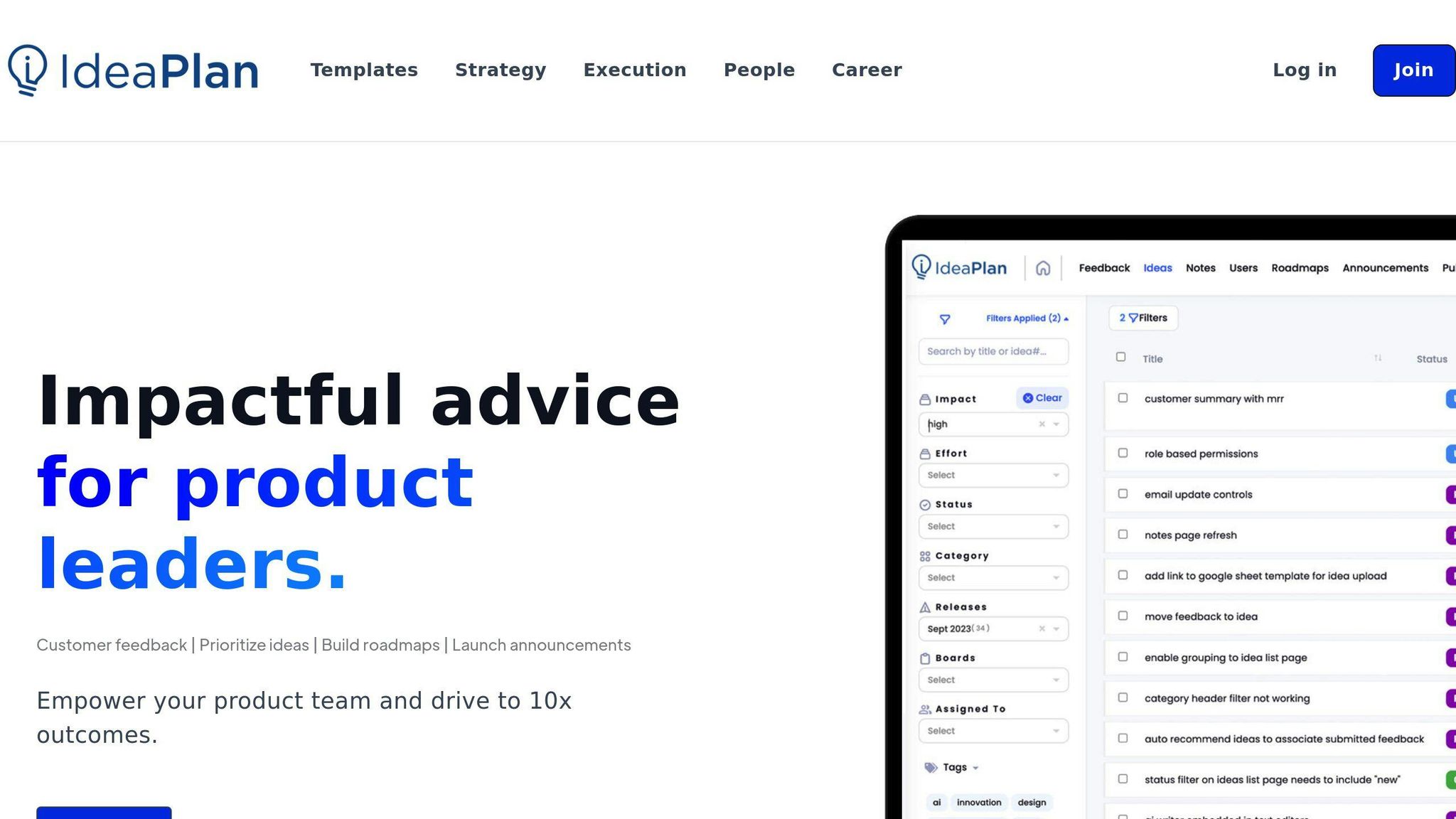
IdeaPlan provides teams with tools like strategic planning templates, collaboration features, and performance tracking dashboards. These resources support customer-focused development, agile roadmapping, and better communication with stakeholders.
Conclusion
This checklist outlines key strategies for tackling the challenges product managers will face in 2025. Achieving success relies on mastering these approaches and leveraging modern tools effectively.
AI-powered tools make product teams 40% more likely to hit their goals. When combined with strong stakeholder alignment and a customer-first mindset, these tools can help ensure long-term success.
Product managers should prioritize three main areas to excel in today’s fast-changing market:
| Focus Area | Key Actions | Expected Impact |
|---|---|---|
| Strategic Planning | Define clear OKRs and align with the product vision | Better team alignment and goal execution |
| Customer Centricity | Use ongoing feedback loops and user testing | Stronger product-market alignment |
| Technology Integration | Utilize AI tools and data visualization | 28% boost in decision-making accuracy |
Using frameworks like MoSCoW and creating flexible roadmaps helps teams stay responsive. Tools such as Amplitude and regular feedback cycles keep teams focused on user needs and ready to adapt. By concentrating on strategic planning, customer focus, and smart tech use, product managers can deliver strong results and drive growth.
Succeeding in 2025 will require a mix of flexibility, creativity, and reliance on proven strategies. By following these principles, product managers can guide their teams to success in an ever-changing landscape.
FAQs
What is the best tool for product management?
The right product management tool depends on your team's specific needs throughout the product development process. Here's a quick overview of tools based on their focus:
| Category | Top Tools | Key Features |
|---|---|---|
| User Analytics | Pendo, Amplitude | Tracks user behavior in real-time |
| Roadmapping | ProductPlan | Helps create visual timelines |
| Customer Feedback | SurveyMonkey, Typeform | Simplifies feedback collection |
| User Interviews | Zoom, GoToMeeting | Offers HD recording capabilities |
"The best product management tools are those that help you understand your customers, prioritize your work, and measure the impact of your efforts." - Dan Olsen, author of The Lean Product Playbook
Most product teams find that combining multiple tools works best. Start with analytics tools to monitor user behavior, then add others as your needs grow. When choosing tools, think about factors like scalability, budget, potential ROI, and how easily your team can adopt them.
Ultimately, the tools you pick should align with your product goals and workflows, ensuring they support your team in staying focused on customer needs and executing efficiently.

